



From Beaujolais Nouveau to Moulin-à-Vent: the many faces of Gamay

The many faces of Gamay range from Beaujolais Nouveau, made for youthful fruit, to Moulin-à-Vent, a cru capable of ageing. Between the two, the way the grapes are handled and the wine is kept before bottling influences its texture. The best way to understand the difference is to compare a few bottles, served in the right order.
One grape variety, several ways of making wine
Gamay noir à jus blanc has dark skin and pale flesh. The skins give the juice its colour when they remain in contact with it. How this stage is managed therefore helps shape the character of the resulting red wine.
Beaujolais Nouveau is one example: a short maceration and a wine intended to be enjoyed young for its fruit and supple character. The Beaujolais and Beaujolais-Villages appellations may carry the designation “nouveau” or “primeur”. The 2026 vintage has been on sale since November 19. To continue exploring, browse our Beaujolais wines.
How maceration and ageing make a difference
Maceration is the time the juice spends in contact with the skins. The longer it lasts, the more tannins it can extract; these are noticeable, in particular, as a drying sensation on the gums. Whole bunches may be used for Nouveau as well as for crus, so this practice alone does not define a style meant to be enjoyed young.
Ageing is the period during which the wine is stored and develops before bottling or release. It can take place in tanks: not all crus are aged in wood. For its Régnié cuvée, Julien Sunier describes whole-bunch carbonic maceration for 10 to 20 days, followed by nine months on fine lees—the particles that settle after fermentation. These details describe the domaine’s approach and do not guarantee an identical process for the Régnié 2024.
Our selection for comparing styles
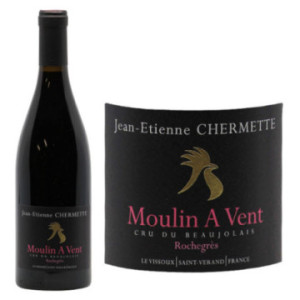
Three bottles are enough to compare textures: Cheveau’s En Chatenay 2024, listed at €11; the Fleurie Poncié Zen 2022 from Bret Brothers; and the Moulin-à-Vent Rochegrès 2021 from Jean-Étienne Chermette. Moulin-à-Vent is a cru appellation located in the communes of Romanèche-Thorins and Chénas, not a brand. Its ageing potential depends on the cuvée and vintage. These examples can be complemented by our selection of Beaujolais wines.

Beaujolais-Villages "En Chatenay" 2024


Fleurie "Poncie" Zen 2022

- -10%
Chiroubles "Grille-Midi" 2021

Régnié 2024

Morgon "Douby" 2024

Côte de Brouilly 2022
- -10%
Moulin à Vent "Rochegrés" 2021

Saint-Amour "Les Grandes Vignes" 2024
How to organise a tasting at the table
Serve the wines from the most supple to the most structured. Aim for 13–15 °C for Fleurie and 15–17 °C for Moulin-à-Vent. Pay attention to the tannins and the finish—how long the wine’s sensations linger after tasting. Jot down a few notes before moving on to the next glass.
The three bottles featured come from different producers and vintages, so this is a comparison of styles, not solely of terroir. At the table, poultry pairs well with Fleurie; mushrooms or slow-cooked meat can complement the structure of a Moulin-à-Vent. For advice on ageing a specific bottle, contact Grands Bourgognes rather than relying on a universal timeframe.
Frequently asked questions about Gamay wines
When is Beaujolais Nouveau 2026 released?
Beaujolais Nouveau from the 2026 harvest has been on sale since November 19, 2026. To explore the region at Grands Bourgognes, browse our Beaujolais selection.
Which Gamay should I choose for a first comparison?
Compare a supple wine, such as En Chatenay 2024, with a Fleurie and then a Moulin-à-Vent. Three bottles are enough to experience different textures.
What temperature should I serve Fleurie and Moulin-à-Vent at?
Serve Fleurie at around 13–15 °C and Moulin-à-Vent at around 15–17 °C. Start with the more supple wine.
How long can you age a Moulin-à-Vent?
Some Moulin-à-Vent wines can age, but their potential varies by cuvée and vintage. Ask Grands Bourgognes for advice on a specific bottle.
What food pairs well with Fleurie or Moulin-à-Vent?
Poultry is a good option with Fleurie. With Moulin-à-Vent, try mushrooms or slow-cooked meat.