



Pinot Noir grape: origins, vine and wine profile
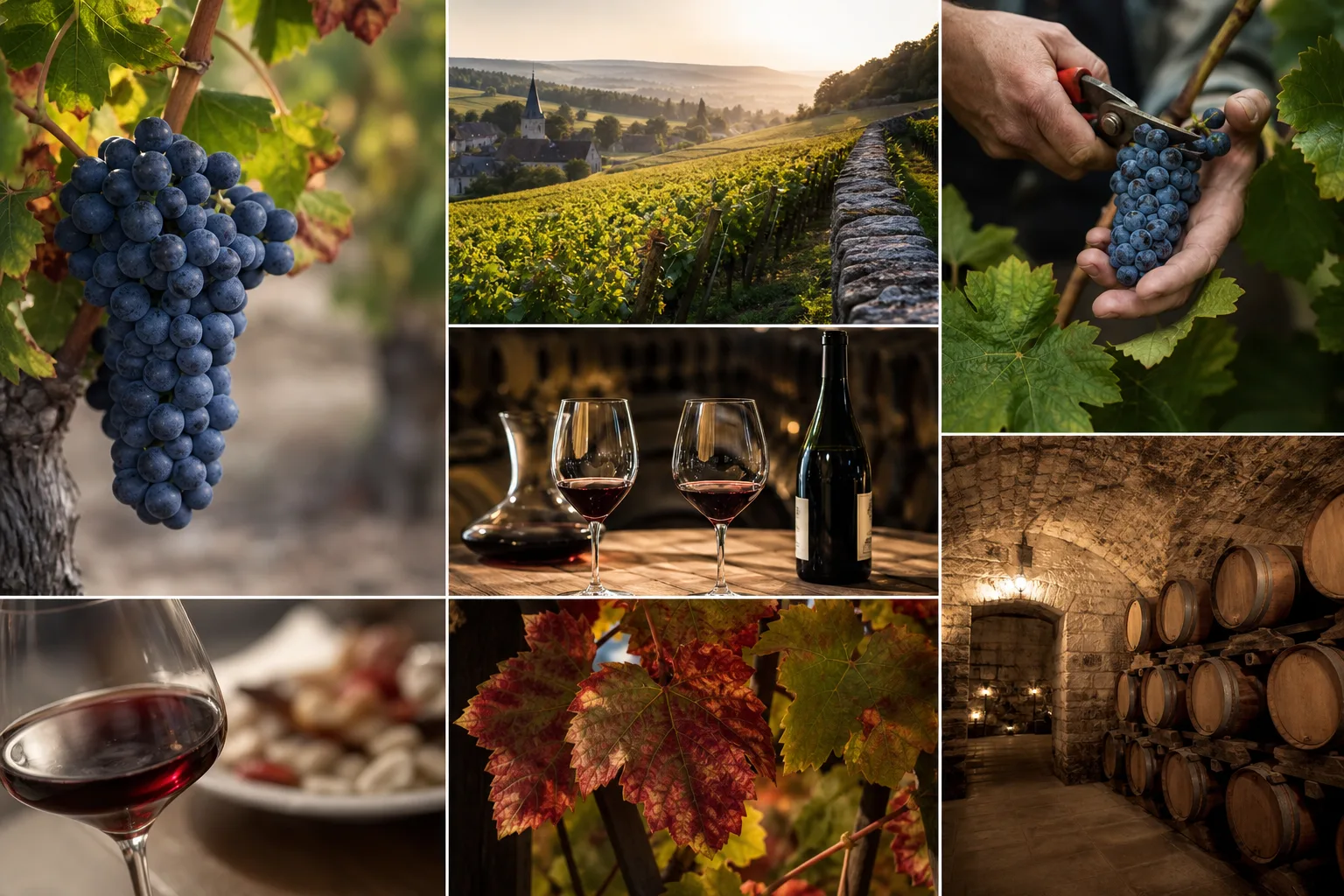
The Pinot Noir grape is one of the great benchmark red varieties for those who seek finesse rather than power. Early-ripening, fragile and highly sensitive to where it grows, it produces elegant red wines, sometimes delicate in their youth, yet capable of gaining depth, complexity and emotion over time. Its most famous place of expression remains Burgundy, especially the Côte de Nuits and the Côte de Beaune, but it also thrives in cool climates where the balance between ripeness, acidity and aromatic delicacy can be preserved.
Origins and history of the Pinot Noir grape
An ancient grape at the heart of Burgundy’s history
Pinot Noir belongs to one of Europe’s very old grape families. Its name evokes the compact shape of its cluster, reminiscent of a small pine cone, and the dark color of its berries. While it is not exclusively Burgundian in botanical terms, its winegrowing history is inseparable from Burgundy, where it has found its chosen home for centuries.
In the vineyards of the Côte d’Or, monks, the dukes of Burgundy, and then generations of winegrowers gradually identified the plots best suited to revealing its nuances. This detailed reading of the vineyard landscape gave rise to the concept of climats: precisely delimited lieux-dits, distinguished by their soil, slope, exposure, altitude and history.
From Burgundy to the world’s cool-climate vineyards
Today, Pinot Noir is grown far beyond Burgundy. In France, it is also found in Champagne, where it contributes to the blend of many sparkling wines and can produce blancs de noirs champagnes; in Alsace, where it makes increasingly sought-after reds and rosés; and in certain cool areas of the Loire and the Jura.
Internationally, it has taken root in regions where climatic freshness allows it to retain its balance: Germany, Switzerland, Oregon, coastal California, New Zealand, cool-climate Chile and certain areas of Australia. Yet everywhere, the same conclusion remains: Pinot Noir does not tolerate guesswork. It rewards the right terroirs and measured decisions.
Characteristics of Pinot Noir in the vineyard
An early-ripening and demanding grape variety
Pinot Noir is a grape variety with relatively early budbreak, which exposes it to spring frosts. It also ripens fairly early, an advantage in cool regions where summer does not always provide a long ripening season. This precocity partly explains its affinity with temperate to cool climates.
Its clusters are often compact, with small, thin-skinned berries. This morphology favors finesse in the wines, but also makes the grapes sensitive to grey rot, powdery mildew, downy mildew and sudden changes in humidity. The winegrower must therefore monitor aeration around the clusters, yield control and vine health right up to harvest.
Soil, climate and yield: three decisive factors
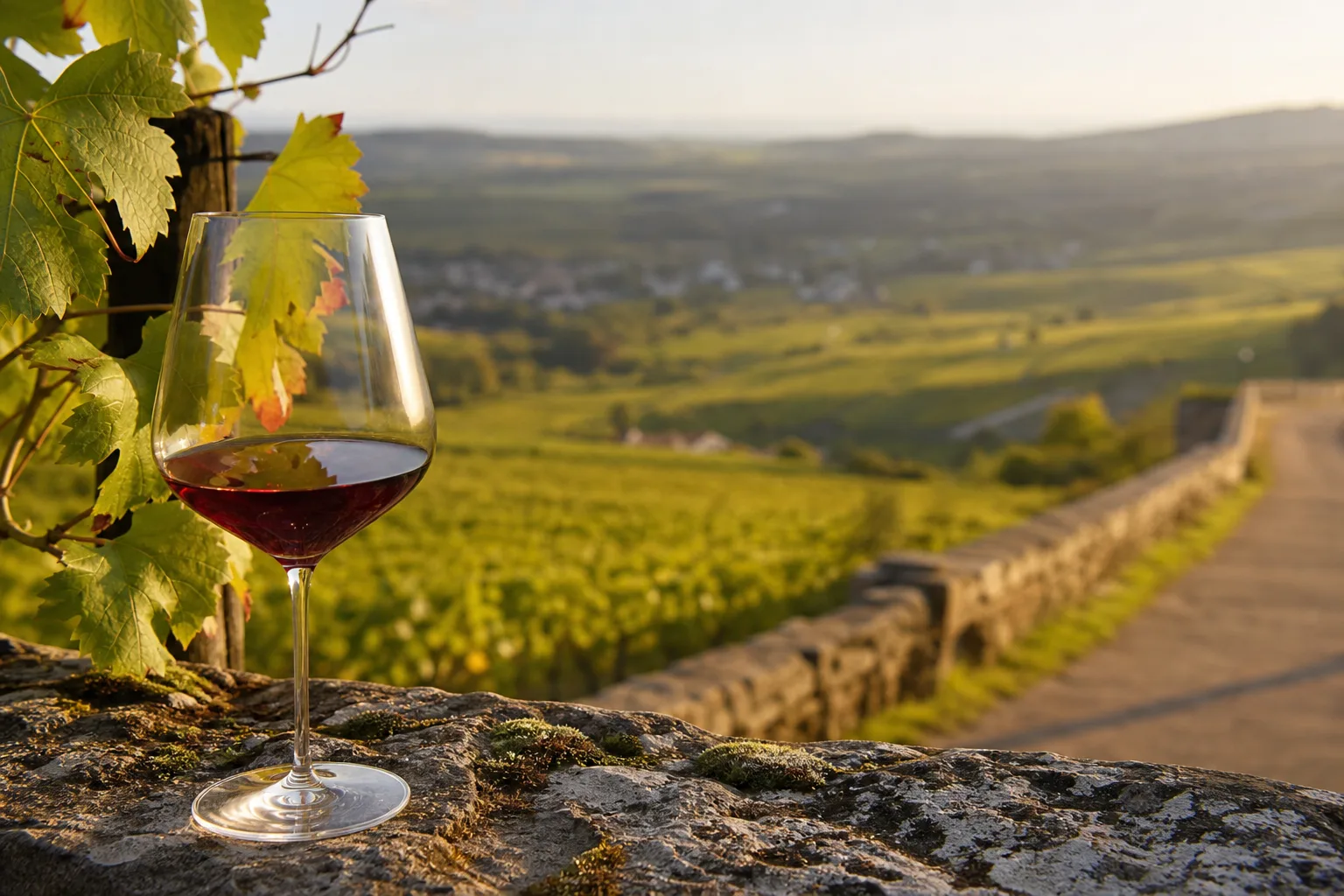
Pinot Noir gives its best results when the vine is neither too vigorous nor too constrained. Well-drained clay-limestone soils, able to retain a degree of freshness without excess water, are among its preferred terroirs. Exposure also plays a major role: slow, even ripening helps preserve acidity, aromatic delicacy and tannic finesse.
Yields must remain under control. When too generous, Pinot Noir can lose density, precision and depth. Conversely, an excessive pursuit of concentration can mask its natural charm. The best balance is often found at just the right level of ripeness, where the fruit remains vibrant, the tannins silky and the alcohol restrained.
A grape variety sensitive to the vintage
Few grape varieties convey the vintage with such transparency. A cool year will produce wines that are more taut, floral and sometimes slender; a sunny year will offer more flesh, ripe fruit and roundness. This sensitivity makes Pinot Noir a fascinating grape for enthusiasts: each bottle can become a reading of the year’s climate and the place it comes from.
Marsannay "Le Finage" 2022
-
92
Volnay 1er Cru Santenots 2021

Bourgogne Hautes-Côtes de Nuits Charmont 2022
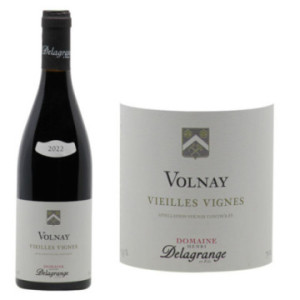
Volnay 'Vieilles Vignes' 2022
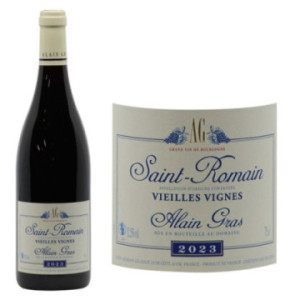
Saint-Romain Rouge 'Vieilles Vignes' 2023
-
94
-
90
-

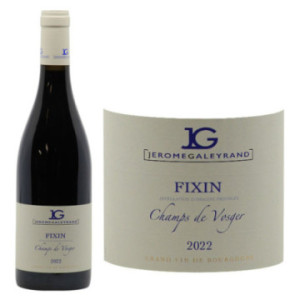
Fixin Champs de Vosger 2022
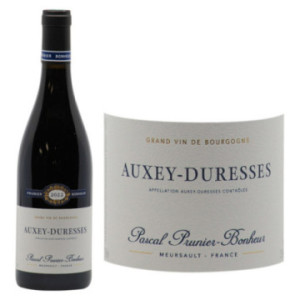
Auxey-Duresses Rouge 2022

Savigny-lès-Beaune 2022
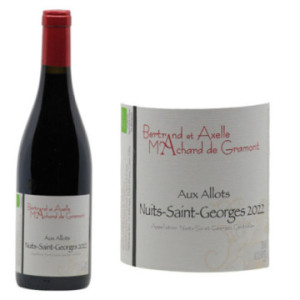
Nuits-Saint-Georges Aux Allots 2022
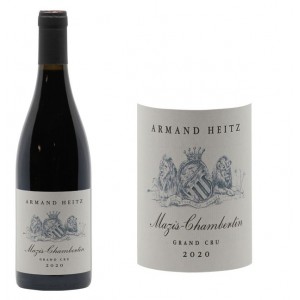
Mazis-Chambertin 2020
Aromatic profile and style of wines made from Pinot Noir
Aromas of red fruit, flowers and spices
In its youth, Pinot Noir often evokes cherry, sour cherry, raspberry, wild strawberry and sometimes redcurrant. The finest expressions add a floral dimension, with notes of violet, peony or faded rose. Depending on the terroir, ageing and vintage, nuances of sweet spice, liquorice, subtle pepper or stone fruit kernel may appear.
With age, great Pinot Noirs develop more complex aromas: forest floor, dead leaves, mushroom, fine leather, truffle, black tea, humus and smoky notes. This evolution is not simply a matter of aromatic power, but of depth in texture and perfume, often described as a form of transparency.
A structure built on finesse
Wines made from Pinot Noir are generally less deeply colored than those made from Syrah, Cabernet Sauvignon or Mourvèdre. Their hue can range from pale ruby to deeper garnet, without color intensity being a reliable indicator of quality. Their strength lies elsewhere: in the precision of the fruit, the delicacy of the tannins, the freshness on the palate and the aromatic length.
Depending on its origin, the style can vary greatly. A Pinot Noir from Burgundy will often emphasize tension, mineral depth and a sense of place; a Pinot Noir from Alsace may offer bright, juicy and highly drinkable fruit; a Pinot Noir from a sunnier climate will be fuller, sometimes marked by black fruit and a more generous texture.
Food pairings and serving
Pinot Noir is one of the most versatile red wines at the table. It pairs gracefully with roast poultry, pork tenderloin, veal with mushrooms, duck breast with only a light touch of sweetness, porcini risotto, or certain characterful fish such as tuna, monkfish or salmon when served with a light sauce.
For serving, a slightly cool temperature is often better than an overly warm room temperature: around 14 to 16 °C for young, fruit-driven cuvées, and 16 to 17 °C for more structured or mature wines. Moderate aeration can help a young Pinot Noir open up, but older vintages require greater caution.
Questions fréquentes sur le cépage Pinot Noir
Is Pinot Noir only a Burgundy grape variety?
No. Pinot Noir is historically and culturally very closely linked to Burgundy, where it has achieved exceptional renown, but it is also grown in Champagne, Alsace, the Loire, the Jura and several cool-climate vineyards around the world.
What does a Pinot Noir wine taste like?
A Pinot Noir often evokes cherry, raspberry, wild strawberry, violet and sweet spices. With age, it can develop notes of forest floor, mushroom, fine leather, black tea or truffle.
Why is Pinot Noir considered difficult to grow?
It is early-ripening and sensitive to frost, disease, rot and excessive yields. Its thin-skinned berries and compact clusters require precise viticulture, with particular attention to vine health and ripeness.
Does Pinot Noir always produce light wines?
Not always. It often produces fine, lightly tannic and elegant wines, but certain terroirs, old vines or sunny vintages can yield deep, structured Pinot Noirs capable of long ageing.
What dishes should you serve with Pinot Noir?
It pairs very well with poultry, veal, pork, duck, mushrooms, certain noble fish and delicate cheeses. Its freshness and moderate tannins make it a particularly adaptable red wine at the table.