


-
91
-

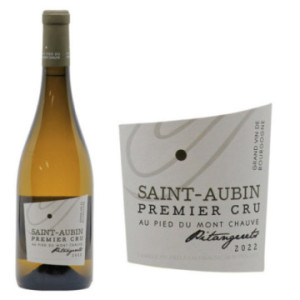
Saint-Aubin 1er Cru Pitangerets 2022
-
91
-
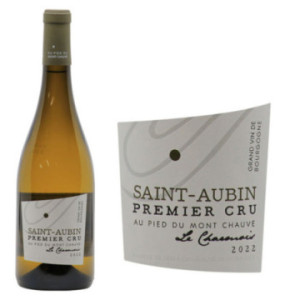
Saint-Aubin 1er Cru Le Charmois 2022
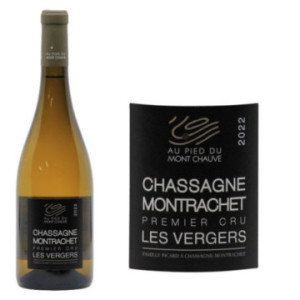
Chassagne-Montrachet 1er Cru Blanc Les... 2022
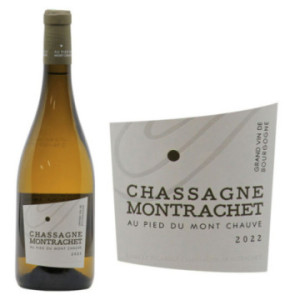
Chassagne-Montrachet Blanc 2022
What is the history of Au Pied du Mont Chauve Estate
Au Pied du Mont Chauve Estate was established in the late 2000s by the Picard family, already owning vineyards in Chassagne-Montrachet, Puligny-Montrachet, and Saint-Aubin. The estate's name refers to the "Mont Chauve," the local nickname for the Montrachet hill. Under the guidance of Francine Picard, the estate has embraced biodynamic viticulture, respecting both the environment and the terroirs.
Which are the most emblematic terroirs of Au Pied du Mont Chauve Estate
The estate spans approximately 35 hectares, covering around twenty prestigious climats. Notable appellations include:
- Chassagne-Montrachet Premier Cru Les Chaumées
- Puligny-Montrachet Premier Cru Les Demoiselles
- Saint-Aubin Premier Cru En Remilly
- Corton-Charlemagne Grand Cru
These parcels benefit from clay-limestone soils and ideal exposure, providing optimal conditions for vine cultivation.
What are the typical aromas of Au Pied du Mont Chauve Estate wines
The estate's white wines, primarily from Chardonnay, are characterized by aromas of white-fleshed fruits such as pear and apple, accompanied by floral and mineral notes. The red wines, crafted from Pinot Noir, reveal aromas of red fruits like cherry and raspberry, with subtle spicy and woody nuances.
What is the aging potential of Au Pied du Mont Chauve Estate wines
The estate's white wines have excellent aging potential, evolving favorably over 5 to 15 years, depending on the appellation and vintage. The red wines can also age between 5 and 12 years, developing complexity and depth over time.
What food pairs well with Au Pied du Mont Chauve Estate wines
The white wines pair perfectly with seafood, grilled or sauced fish, and soft cheeses. The red wines are ideal with white meats, roasted poultry, or stews, and ::contentReference[oaicite:1]{index=1}