


How to Build a Balanced Wine Cellar for Autumn
To build a balanced wine cellar for autumn, think in terms of use rather than accumulation: a few supple wines for impromptu meals, whites suited to the table, sparkling wines for entertaining and bottles intended to evolve. Balance depends less on an ideal number of bottles than on how well they complement one another. A precise inventory, a mix that reflects your tastes and good management of drinking windows will help you build a living cellar, ready to accompany both the first autumn dishes and the festive meals to come.
Take stock of your cellar before autumn
Before making any purchase, list the bottles you already have. A simple spreadsheet can indicate, for each wine, the estate or house, the appellation, vintage, colour, quantity, purchase date and estimated drinking period. The exact location in the cellar — bin, shelf or zone — also saves you from searching for a bottle at the last minute.
Then sort the wines into three groups: to drink soon, to monitor and to keep. Drinking windows are never absolute deadlines: they vary according to the vintage, the style of the cuvée, storage conditions and personal preferences. A bottle said to be at maturity may continue to evolve, but it deserves to be monitored and, when several examples are available, tasted progressively.
Above all, the inventory reveals imbalances. A cellar may contain many structured reds while lacking lively whites for fish, sparkling wines for aperitifs or approachable wines for a casual dinner. So review your reserves by colour, but also by use: aperitifs, everyday meals, plant-based cuisine, meats, fish, cheeses and special occasions.
Finally, use this check to identify unintentional duplicates and forgotten purchases. A coherent cellar does not necessarily have to be large: it must provide an appropriate answer to the situations you actually encounter. This starting snapshot is the best safeguard against impulse buying and helps you set a list of priorities for autumn.
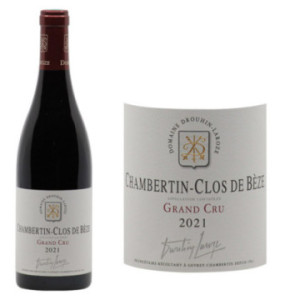
Chambertin Clos-de-Bèze 2021
-
96
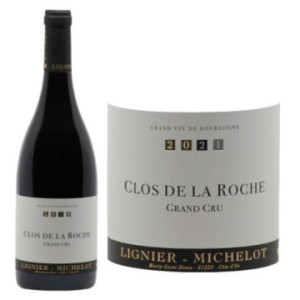
Clos de la Roche 2021
-
95
-
93
-

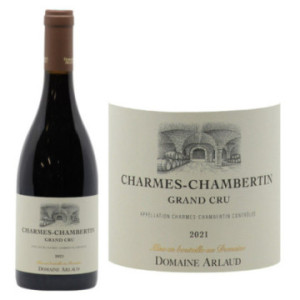
Charmes-Chambertin 2021
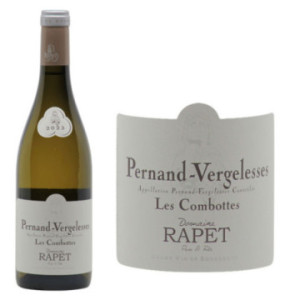
Pernand-Vergelesses Blanc Les Combottes 2023
-
95
-
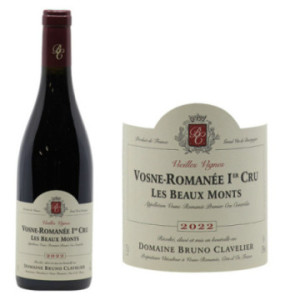
Vosne-Romanée 1er Cru Les Beaux Monts 2022
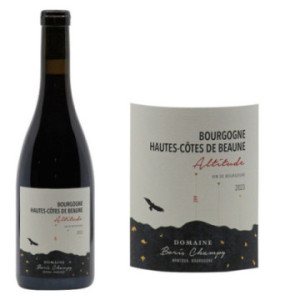
Bourgogne Hautes-Côtes de Beaune "Altitude" 2023
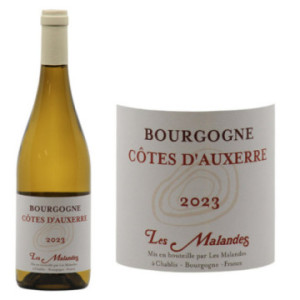
Bourgogne Côtes d'Auxerre Blanc 2023
-
94
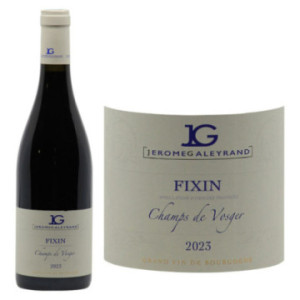
Fixin Champs de Vosger 2023
Divide bottles between red, white, rosé and sparkling wines
There is no universal distribution. For a general-purpose cellar, a useful guideline might be 45 to 55% red wines, 25 to 35% whites, 5 to 10% rosés and 10 to 15% sparkling wines. These proportions are a starting point, not a rule: a kitchen focused on fish, shellfish or vegetables can naturally give more space to whites.
In autumn, reds often return to the centre of the table with roast poultry, mushrooms, braised meats and the first autumn dishes. It is useful to combine supple wines, such as certain Pinot Noir from Burgundy or certain Gamay from Beaujolais, with more full-bodied reds from, for example, the Rhône Valley. Structure should be chosen according to the dish, not solely according to the prestige of the label.
Whites are not reserved for summer. A lively Burgundian Chardonnay can accompany fish or chicken in a cream sauce, while a fuller-bodied white will find its place with rich sauces or certain cheeses. Plan for both taut, refreshing profiles and more enveloping wines, so you can respond to different culinary textures.
Rosés may take up less space after the warm season, without disappearing altogether: their freshness suits aperitifs, spicy cuisines and certain Mediterranean dishes. As for sparkling wines, they deserve to remain available all year round. They are used for celebration, but also to open a meal, accompany savoury bites or add lift to a brunch. Adjust the distribution according to your observed consumption rather than a theoretical image of the perfect cellar.
Combine wines to drink soon with bottles to age
A balanced cellar should remain useful in the present without sacrificing the future. A simple approach is to set aside around half the bottles for consumption within two years, a quarter to enjoy in the medium term and a final quarter for longer aging. This framework should be adjusted according to the size of the cellar, your rate of consumption and your patience.
Wines to drink soon are not secondary choices. They bring fruit, freshness and valuable availability for everyday meals. Their appeal lies in immediate pleasure: it would be counterproductive to fill a cellar only with bottles that require several years of waiting. Also keep a few versatile, affordable wines so you can open a bottle without waiting for a special occasion.
Age-worthy cuvées follow another logic. Their ability to age may depend on acidity, tannins, concentration, the wine’s overall balance and the quality of the vintage. In Burgundy, a well-born premier cru or grand cru can gain complexity over time, but the appellation alone guarantees neither a precise lifespan nor successful evolution. The producer, cuvée, vintage, bottle format and storage conditions all play a role.
When the budget allows, buying two or three bottles of the same wine provides a valuable learning tool. One can be opened in its youth, another a few years later, then the last at a more advanced stage. This staggered tasting helps you understand the evolution of aromas, texture and balance, while reducing the risk of waiting too long.
Finally, do not confuse suitability for aging with an obligation to age. Some wine lovers enjoy the energy of young wines; others seek the tertiary notes of undergrowth, spices, dried fruit or wax that appear over time. The cellar should reflect this personal preference while maintaining sufficient turnover.
Diversify regions, appellations and wine styles
Diversity prevents a cellar from being perfectly suited to one type of meal yet ill-equipped for others. In Burgundy, it can begin by combining several appellation levels: accessible regional appellations, villages with a more defined character, then a few premiers crus or grands crus reserved for aging and selected occasions. The goal is not to tick off every category mechanically, but to bring together wines with distinct expressions and uses.
Burgundy already offers great variety. Wines from Chablis can bring tension and mineral expression; the Côte de Nuits is especially renowned for its Pinot Noir; the Côte de Beaune combines great reds with outstanding Chardonnay; the Côte Chalonnaise and the Mâconnais allow you to explore other profiles, often with appealing relationships between price, pleasure and appellation. Within the same area, however, the producer, climat, exposure and vintage create noticeable differences.
A balanced selection also benefits from looking beyond the great Burgundies. Beaujolais, particularly through its crus, offers Gamay ranging from crunchy fruit to expressions capable of aging. The Rhône Valley lets you discover Syrah in the north and blends notably dominated by Grenache in many southern appellations. The Loire, Alsace, Jura, Provence, Corsica, Bordeaux or Champagne can complete the cellar according to the tastes you are seeking.
Diversifying also means varying styles: light or powerful wines, dry or sweet, oaked or only lightly marked by élevage, still or sparkling. This openness makes it easier to pair wines with food and refine your palate. To control your budget, alternate benchmark bottles with less famous appellations, without assuming that a high price automatically guarantees greater pleasure.
Online purchases make this exploration easier, provided you read the essential information: appellation, grape variety or blend, vintage, tasting profile, aging potential and serving recommendations. An autumn order can thus be built as a complementary whole, rather than a succession of unrelated favourites.
Organise and store your cellar in the right conditions
The quality of the selection is not enough: poor storage can accelerate or alter the evolution of wines. Above all, seek a stable temperature, ideally around 12°C for long-term storage. A slightly different temperature is often acceptable if it varies little; sudden and repeated changes are more problematic than a moderate, constant difference.
Darkness protects wine from light, while sufficient humidity limits cork drying and label deterioration. In a traditional cellar, humidity of approximately 60 to 75% is a common benchmark. Gentle ventilation helps prevent stagnant odours and excessive mould. Bottles should also be kept away from vibrations, heat sources and strongly scented products.
Bottles sealed with natural cork are generally stored lying down to keep the cork in contact with the wine. Bottles intended for near-term consumption can be placed in an easily accessible area, while wines for aging are best kept in less frequently handled bins. Organise the whole by region, colour or drinking horizon, according to the method that feels most intuitive to you.
Label the bins and update the inventory whenever a bottle enters or leaves. A simple rotation system consists of reserving a space for wines to drink within the year, then restocking it after each tasting. Check the cellar at every change of season to spot a bottle nearing maturity, an abnormally low fill level or a capsule showing signs of leakage.
If you do not have a natural cellar, a wine aging cabinet provides a more stable environment than a heated room. Its capacity should be chosen with a reasonable margin: a cellar often fills up faster than expected. Rigorous organisation then turns the collection into a true tasting reserve, easy to read, well preserved and simple to renew throughout the year.
Questions fréquentes sur la composition d’une cave équilibrée
How many bottles do you need to start a wine cellar?
There is no mandatory number. A cellar of around twenty to thirty bottles can already be balanced if it combines several colours, styles and drinking horizons. It is better to start modestly, observe your rate of consumption, then add to it gradually.
What proportion of red and white wines should you plan for?
A general-purpose base might include 45 to 55% reds and 25 to 35% whites, with the rest divided between rosés and sparkling wines. These proportions should nevertheless follow your tastes and your cooking: lovers of fish, seafood or plant-based dishes may significantly increase the share of whites.
How much of the cellar should be reserved for age-worthy wines?
For a versatile cellar, around a quarter of the bottles can be intended for long aging, another quarter for the medium term and half for consumption within two years. Lovers of mature wines can increase the aging share, provided they keep enough bottles immediately available.
Should you buy several bottles of the same wine?
Yes, especially for wines capable of evolving. Buying two or three bottles lets you taste the same cuvée at different stages and better understand its development. For everyday wines, however, diversification may be preferable if space or budget is limited.
Can wine be stored without a natural cellar?
Yes. A wine aging cabinet maintains a stable temperature and protects bottles from light. Failing that, choose the coolest, darkest and calmest place in the home, away from radiators and temperature fluctuations, but reserve this solution for relatively short storage periods.