


Why Discover New Estates at the Wine Fair?
Discovering new estates at the Wine Fair is particularly worthwhile because this event brings together, for a limited time, wines from a wide range of regions, estates and vintages. Beyond the famous labels, it offers an opportunity to compare winemakers’ signatures, explore less familiar appellations and buy with better points of reference. The right approach, however, is to treat the discount as a secondary advantage: origin, style, production methods, storage and how well the wine matches your tastes should remain the priorities.
The Wine Fair, a prime showcase for lesser-known estates
An estate’s reputation does not always reflect the quality of its work. Some properties have a recent history, limited production or still discreet distribution. Others stand in the shadow of more famous neighbours, within an appellation dominated by a few particularly sought-after names. The Wine Fair can therefore act as a showcase by giving these winemakers unusual visibility.
The selections offered by wine merchants and online shops are particularly useful for highlighting young estates, properties taken over by a new generation or estates committed to changing their practices. Organic conversion, more precise parcel-by-parcel work or reduced extraction can reveal a new expression of the estate. These changes should nevertheless be placed in context: a certification provides information about a set of specifications, but does not, on its own, constitute an absolute guarantee of taste quality.
The event also helps you look beyond the most highly publicised cuvées. In a prestigious region such as Burgundy, a regional or village appellation from a meticulous winemaker can offer a very accurate expression of Pinot Noir or Chardonnay. In the Rhône Valley, Beaujolais, Jura or Loire, lesser-known estates can reveal an equally strong identity through their grape varieties, soils and ageing choices.
On a specialist e-commerce website, detailed product pages make this exploration easier. The location of the parcels, grape varieties, farming method, type of ageing and tasting advice help you understand what you are buying. Availability must nevertheless be monitored: hidden-production wines are often offered in small quantities, with no certainty of restocking.
An opportunity to explore new appellations and new terroirs
The Wine Fair is also an invitation to broaden your perspective. A wine lover loyal to Burgundian reds may discover the peppery freshness of a Syrah from the northern Rhône Valley, while someone used to oaked whites may turn to a carefully restrained Chardonnay, a Loire Chenin or a Jura wine with a more distinctive profile. The goal is not to give up your preferences, but to identify the elements you truly enjoy: acidity, fruit, tannins, ripeness, ageing or aromatic intensity.
Exploring a new terroir means considering several levels. The region provides an initial climatic framework; the appellation defines the practices and permitted grape varieties; the parcel brings nuances linked to soil, exposure, altitude or drainage. In Burgundy, the word climat refers to a precisely delimited and historically named vineyard parcel: it should not be confused with climate in the purely meteorological sense. Elsewhere, lieux-dits, crus or geographical units may also indicate a more precise origin.
To move beyond your habits without buying at random, it is useful to proceed by comparison. You can choose two wines based on the same grape variety but from different regions, or two cuvées from the same appellation made using distinct approaches. Comparing a Gamay from Beaujolais with a Burgundian Pinot Noir, for example, helps distinguish what comes from the grape variety, the terroir, the vintage and the winemaking.
Diversification can also be guided by occasions of use. A crisp white for seafood, a supple red for simple cooking, a structured cuvée to cellar or a more mature wine for an upcoming meal do not meet the same need. Putting together a selection of a few bottles with complementary profiles is often more instructive than buying a large quantity of an unknown reference simply because its price seems attractive.

Hermitage "La Chapelle" 1976
-
94
-
95-98
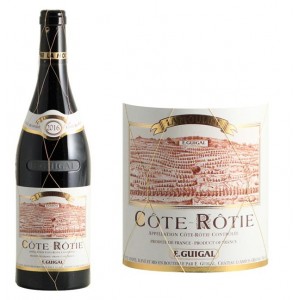
Côte Rôtie La Mouline 2016

-
98-100
-

Hermitage "La Chapelle" 2018

Vinsobres "Les Hauts de Julien" Vieilles... 2019

Châteauneuf-du-Pape "Les Chapouins"... 2014

Gigondas 2019

Côte Rôtie "But de Mont" 2018

Côte Rôtie "La Belle Helène" 2018
How to identify a promising estate during the Wine Fair
The first criterion is the consistency of the information available. A precise presentation should make it possible to identify the appellation, vintage, grape varieties, farming method, broad approach to vinification and ageing, as well as the serving temperature or drinking window. A lack of detail does not necessarily indicate a poor wine, but it does make buying online more uncertain.
The vintage should be interpreted at the level of the region and the style sought. A warm year can produce generous, ripe wines, while a cooler year may favour tension and finesse, although this contrast is not systematic. The winemaker’s skill, the harvest date, the health of the grapes and the characteristics of the parcel can matter as much as the year’s general reputation.
Production methods then provide clues to the estate’s style. Manual harvesting, organic or biodynamic farming, fermentation with native yeasts, proportion of whole bunches, length of maceration, use of new oak and filtration all influence the final profile. None of these choices is inherently superior: their relevance depends on the grapes, the terroir and the balance being sought.
A winemaker’s reputation is assessed over time. Tasting notes, customer reviews and awards can guide your search, but they should be cross-checked. It is best to favour concrete descriptions relating to the wine’s balance, texture, aromas and development rather than purely laudatory phrases. Consistency across several cuvées or several years is often a stronger signal than an isolated score.
Cellaring potential depends on concentration, acidity, tannic structure for reds, balance and sometimes sugar or ageing. It varies considerably according to appellation and cuvée. A mention such as “drink or keep” should therefore be refined with a realistic tasting window. Before buying several bottles, you should also have a dark, stable place, free from vibration and kept at a suitable temperature.
Finally, provenance and storage are crucial. A promising wine can be weakened by excessive temperatures or repeated fluctuations. When buying online, the quality of storage, packaging and shipping conditions deserve as much attention as the advertised discount. To limit risk, a sensible strategy is to buy one or two bottles first, taste them in good conditions, then explore the estate further if its style proves convincing.
Questions fréquentes sur la découverte de domaines à la Foire aux Vins
Can the Wine Fair really help you make good discoveries?
Yes, provided you do not choose based on price alone. Broader selections make it possible to encounter less widely distributed estates, hidden appellations and unusual cuvées. However, you still need to examine the origin, vintage, wine style and storage conditions.
How do you choose an estate you do not know?
Start by checking how detailed the product page is: location, grape varieties, vintage, farming, vinification, ageing and drinking window. Then cross-check the available reviews and look for factual descriptions. For a first discovery, buying one or two bottles limits the risk.
Does a little-known estate always offer better value for money?
No. Low visibility may be due to limited production or restricted distribution, but it does not guarantee quality. Value for money should be assessed according to the wine’s balance, origin, appellation level, the producer’s work and the pleasure expected.
Should you prioritise great vintages during a Wine Fair?
Not systematically. A highly regarded vintage can offer concentration and good cellaring potential, but a less publicised year can produce fine wines that are accessible earlier and sometimes more affordable. A vintage should always be interpreted in light of the region, appellation and winemaker.
How many bottles should you buy to discover a new estate?
One or two bottles are enough for a first impression. If the wine is intended for ageing, it may be useful to buy three in order to follow its development at different stages. Larger purchases are preferable after a successful tasting or when the estate’s style is already well documented.