

What wines should you serve at a summer barbecue?
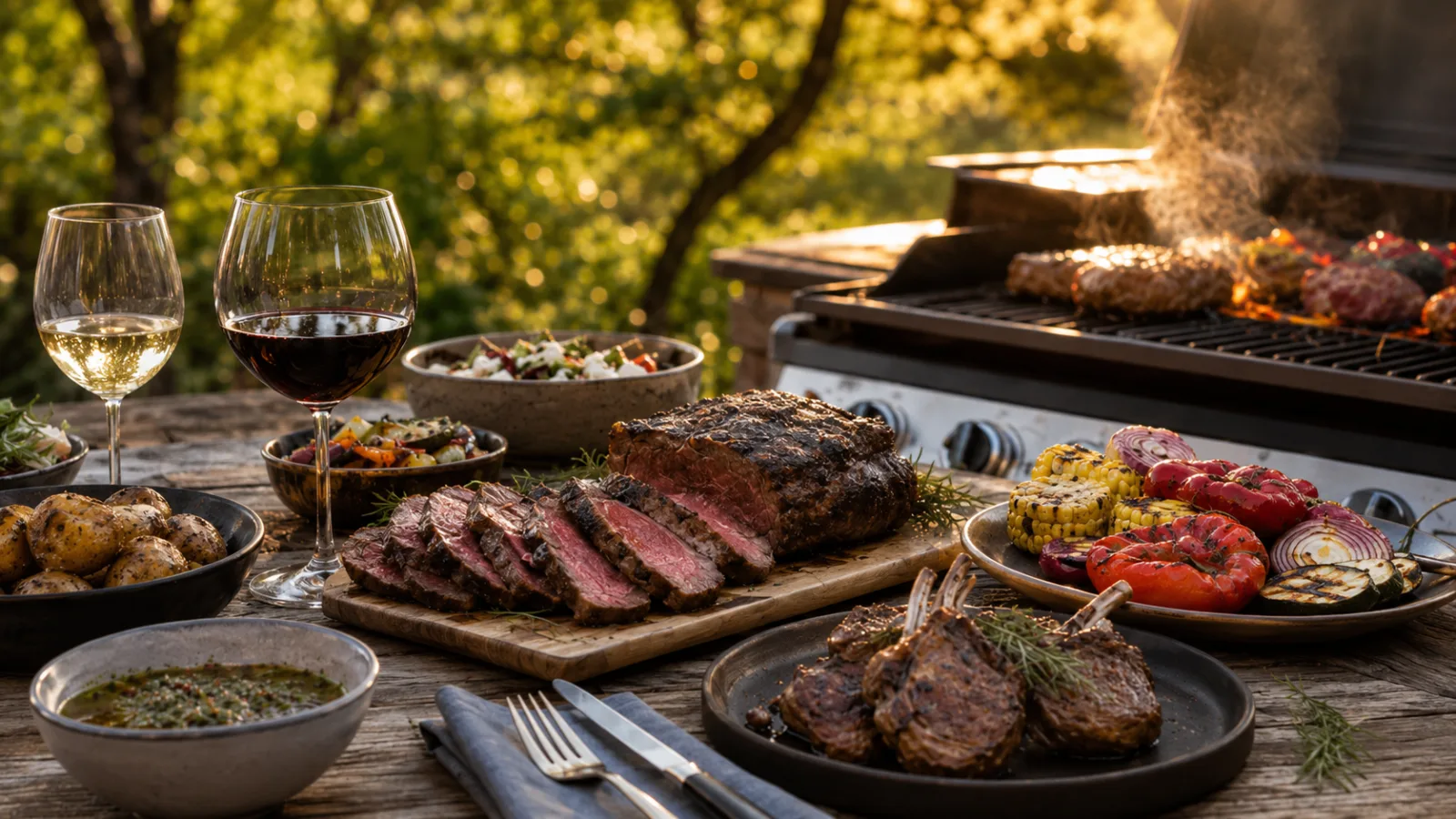
The best wines for a summer barbecue are those that bring freshness without overpowering the grilled food: fruity, supple reds for meats, taut whites for fish and poultry, rosés for versatility, and bubbles for the aperitif and more festive moments. The point is not to choose the most powerful wine, but the one that complements the heat of the fire, the marinades, herbs, sauces and conviviality of an outdoor meal.
Which red wines should you serve with grilled meats?
With grilled meats, red wine remains a great classic, provided you choose cuvées that are fruity, lightly oaked and easy to drink. The smoky taste of embers, the Maillard reaction on the surface of the meat and the marinades call for a wine with presence, but not necessarily power.
With a rib steak, entrecôte or flank steak, a red that is both juicy and structured works very well. A Pinot Noir de Bourgogne in a fleshy style, a Beaujolais made from Gamay, a Crozes-Hermitage or a Saint-Joseph made from Syrah, when the oak remains discreet, can offer the right balance between fruit, freshness and structure. The idea is to accompany the meat without adding a drying sensation.
Grilled lamb often calls for a more aromatic red, able to respond to herbs, garlic, rosemary or thyme. Reds from the Rhône, certain wines from the Languedoc or well-controlled southern cuvées are particularly suitable, provided you do not seek excessive concentration. A wine that is too sun-drenched could reinforce the heat of both the dish and the summer.
With sausages, merguez, marinated skewers or pork ribs, look for fruit and suppleness. Spices, paprika, pepper, cumin or lightly sweet sauces appreciate generous reds with round tannins. A Gamay, a Pinot Noir served chilled, a Corsican red based on Niellucciu or Sciaccarellu, or an approachable Côtes-du-Rhône can make for a convivial, easy-to-digest pairing.
The perfect white wines for barbecued fish, poultry and vegetables
White wines are often underestimated at barbecues, even though they are essential as soon as the grilled dishes become more delicate. Fish, prawns, marinated chicken, turkey, halloumi, courgettes, aubergines or grilled peppers need wines capable of bringing tension and precision.
With grilled fish, favor fresh, dry and clean whites. A Chardonnay de Bourgogne in a taut style, a Chablis, a balanced white Mâcon, a Muscadet, a white Sancerre or a Corsican Vermentinu can highlight iodine notes, lemon, fresh herbs and olive oil. Minerality and acidity add definition without masking the flesh of the fish.
For grilled poultry, the choice depends on the marinade. Lemon-and-herb chicken likes lively, straightforward whites. A marinade with yogurt, mild spices or light curry can handle a more aromatic white, such as a dry, restrained Viognier, a Loire Chenin or a well-balanced white from the southern Rhône. The key is to keep the finish fresh.
Barbecued vegetables benefit from expressive but not heavy whites. With grilled courgettes, asparagus, fennel or peppers, wines based on Sauvignon, Vermentinu or unoaked Chardonnay are very effective. If the vegetables are served with a yogurt sauce, lemon, mint or basil, the wine’s freshness becomes the guiding thread of the pairing.
Rosés and barbecue: the essential summer pairing
Rosé is often the easiest wine to serve at a barbecue, not out of convenience, but because it makes genuine gastronomic sense. Its freshness, fruit, suppleness and ability to move from one dish to another make it a natural companion for summer meals.
With marinated meats, skewers, grilled pork, herb sausages or lightly spiced dishes, a dry, well-built rosé offers a very versatile pairing. Rosés from Provence, Corsica, the Rhône or the Languedoc can bring different nuances: citrus and flowers for the palest, most taut styles, red fruit and sweet spices for deeper-colored rosés.
Rosé also works with the side dishes that give barbecue its soul: tomato salads, tabbouleh, grilled vegetables, tapenade, hummus, herb potatoes, yogurt sauces or Mediterranean condiments. It connects textures and flavors without imposing too strong a direction.
To avoid banality, choose a dry, balanced rosé with a real finish. A rosé that is too sweet can become heavy with sauces and marinades; a rosé that is too neutral will get lost against the fire and spices. A good barbecue rosé should remain fresh, while having enough substance to hold its own at the table.
And what about bubbles? Champagnes and crémants for a chic barbecue
Sparkling wines bring a festive dimension to a barbecue, but also real usefulness in the pairing. Their bubbles awaken the palate, lighten rich textures and go very well with the aperitif, grilled bites, fish, poultry and certain side dishes.
A brut Champagne, a Crémant de Bourgogne, a Crémant d’Alsace, a Crémant de Loire or another quality French sparkling wine can open the meal with elegance. As an aperitif, it works with gougères, crunchy vegetables, fish rillettes, grilled shrimp or small poultry skewers.
With lighter grilled dishes, bubbles extend the freshness. A lively Blanc de Blancs will pair very well with fish, shellfish and grilled vegetables. A rosé sparkling wine, fruitier in style, can converse with pork skewers, spicy chicken or summer salads. The pairing then becomes more chic, without losing the convivial spirit of the barbecue.
However, avoid sparkling wines with too much dosage alongside foods that are already sweet or rich barbecue sauces. A well-balanced brut, or even an extra-brut for those who enjoy tension, will often provide more precision and definition.
FAQ — Quels vins servir pour un barbecue d'été ?
Which red wine should you choose for a summer barbecue?
Choose a fruity, supple, lightly oaked red: Pinot Noir, Gamay, light Syrah, a Loire red or a balanced Côtes-du-Rhône. Serve it slightly chilled, around 14 to 16°C for the lighter styles.
Does rosé wine go with all grilled foods?
Rosé is very versatile, but not universal. It works very well with marinated meats, skewers, sausages, poultry, salads and grilled vegetables. For a powerful rib steak, a supple but more structured red will often be preferable.
What wine should you serve with barbecued fish?
Serve a dry, fresh and precise white: Chablis, unoaked Chardonnay, Muscadet, white Sancerre, Vermentinu or a Loire white. With oily fish or herb marinades, a dry rosé can also work very well.
Should red wine be chilled for a barbecue?
Yes, especially in summer. A light red can spend 20 to 30 minutes in the refrigerator before serving. The goal is not to make it ice-cold, but to keep it around 14 to 16°C in order to preserve the fruit and freshness.
Can you serve Champagne or crémant with a barbecue?
Yes. Bubbles are excellent as an aperitif and with lighter grilled dishes, fish, poultry, shellfish or vegetables. A brut Champagne, a Crémant de Bourgogne or a Crémant de Loire brings a festive and refreshing touch.