

Burgundy Climats: understanding terroirs, crus and appellations
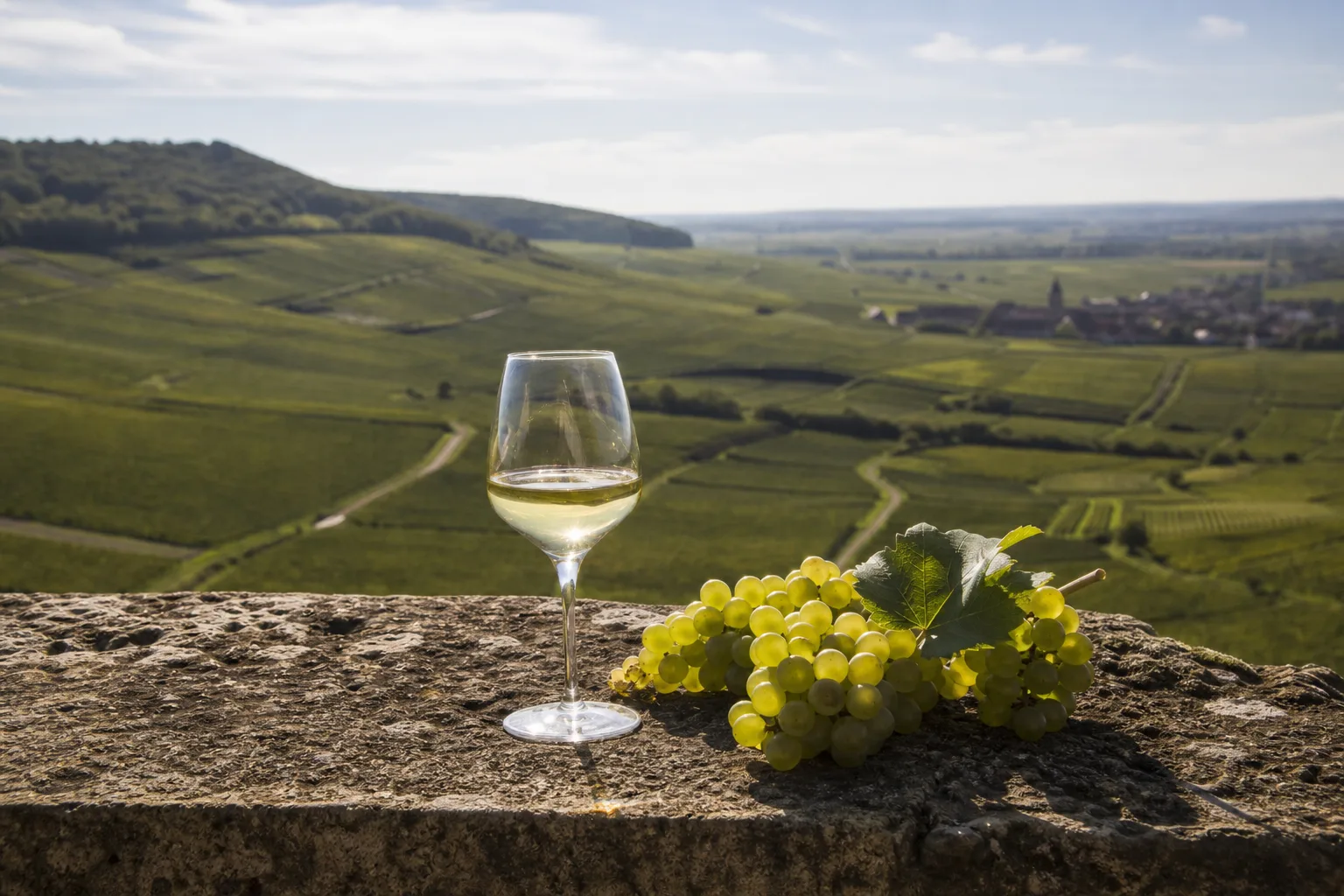
Burgundy climats are precisely delimited vineyard plots, often known for several centuries, whose names express a unique combination of soil, slope, exposure, history and expertise. Understanding climats means learning to read Burgundy at its most intimate: not as a uniform vineyard area, but as a mosaic of terroirs where just a few meters can alter a wine’s texture, aromatics and depth.
Understanding what Burgundy climats are
In Burgundy, the word climat does not refer to the weather. It is an old winegrowing term that names a clearly identified portion of vineyard, delimited in space, linked to a history and renowned for producing a wine with a recognizable character. Each climat has its own name: some refer to the nature of the soil, others to an orientation, a former property, a legend or a distinctive feature of the landscape.
This notion is inseparable from Burgundy because it expresses a patiently built conviction: wine does not come only from a grape variety, but from a place. Pinot Noir and Chardonnay, dominant in Burgundy’s great terroirs, act here as revealers. They finely express the nuances of harder limestone, more clay-rich marl, a better-drained slope or a sunnier exposure.
A climat must be distinguished from a simple lieu-dit and from a cadastral plot. A lieu-dit is first and foremost a geographical name, used to identify a place. A plot is a landholding or cadastral unit, linked to ownership. A climat, by contrast, corresponds to a winegrowing entity recognized for its ability to produce a distinctive wine. It may be farmed by several estates, sometimes divided among many owners, or, conversely, belong to a single estate in the case of a monopoly.
A wine heritage shaped by centuries of history
The precision of Burgundy climats did not emerge in just a few decades. It is the result of a long process of observation, selection and transmission. From the Middle Ages onward, monastic communities, especially the Cistercians and Cluniacs, played an essential role. They cultivated the vines, recorded the results, identified differences between hillsides and gradually understood that certain plots produced wines that were deeper, finer or more consistent.
The Dukes of Burgundy also helped structure this identity. At the end of the 14th century, Philippe le Hardi was already asserting a desire to defend the quality of Burgundy wines, notably by favoring Pinot Noir on the great terroirs. This political and economic gesture helped build a lasting reputation, founded on high standards and the distinction between places.
After the French Revolution, the sale of ecclesiastical property and changes in inheritance law fragmented the vineyard extensively. This fragmentation, sometimes extreme, explains why a single climat may be shared by several growers. Far from erasing the identity of these places, it makes it even more legible: each estate interprets the same climat with its own sensibility, vine age, approach to farming, vinification and ageing.
In 2015, the Climats du vignoble de Bourgogne were inscribed on the UNESCO World Heritage List. This recognition honors not only vineyard landscapes, but also a cultural model: a way of thinking about wine through place, with a precision rarely equaled.
Terroir, soils and exposure: what makes each climat unique
The singularity of a climat is born from a balance between several natural factors. Soil is one of the most decisive: limestone, marl, clay, scree, gravel and variations in depth influence vine vigor, drainage, water reserves and grape ripeness. In Burgundy, the geological complexity is such that two neighboring climats can display very different soil profiles.
Slope also plays a major role. A climat located mid-slope, well drained and facing east or southeast, often benefits from a sought-after balance between sunshine, ventilation and freshness. Lower slopes can produce more generous wines when the soils are deeper, while higher slopes, cooler and sometimes leaner, encourage taut, floral or mineral expressions depending on the site.
Altitude, exposure and microclimate complete this reading. A slight difference in orientation changes the duration of sunshine; an airflow can sometimes limit disease pressure; a combe may bring freshness or increase exposure to frost. A climat is therefore a synthesis: it brings together relief, geology, the local climate in the meteorological sense, but also the human interpretation of these factors.
In the glass, these nuances translate into highly contrasting styles. A Pinot Noir may seem delicate, airy and floral on certain fine limestone soils, or more structured, deep and earthy on more clay-rich soils. A Chardonnay may express lemony tension, buttery breadth, salinity, wet stone or sun-filled richness depending on the precise origin of the grapes.
Climats, appellations and crus: how to find your way
To read a Burgundy label, you need to understand that the climat fits into a hierarchy of appellations. At the base are the regional appellations, such as Bourgogne, Bourgogne Aligoté or Mâcon-Villages. Next come the village appellations, bearing the name of a winegrowing village: Gevrey-Chambertin, Chambolle-Musigny, Meursault, Pommard, Volnay or Puligny-Montrachet, for example.
Within certain village appellations, climats may be classified as Premier Crus. The label will then state the village name, the words Premier Cru, and often the name of the climat. For example, a bottle may indicate Chambolle-Musigny Premier Cru Les Amoureuses or Meursault Premier Cru Les Perrières. The name of the climat then becomes valuable information about the wine’s exact origin.
Grand Crus form the pinnacle of the Burgundy classification. In this case, the climat is generally an appellation in its own right: Chambertin, Musigny, Romanée-Conti, Montrachet or Corton-Charlemagne. The label highlights the name of the Grand Cru, without necessarily placing the village at the center, because the climat itself carries the identity of the appellation.
There are also names of climats or lieux-dits claimed on village wines without Premier Cru classification. Their presence on the label helps refine the wine’s provenance, but should not be confused with a higher classification. The right reflex is therefore to read four pieces of information together: the appellation, any mention of Premier Cru or Grand Cru, the name of the climat and the name of the producer.
A few iconic climats to know
In the Côte de Nuits, several climats embody the greatness of Burgundy Pinot Noir. Chambertin, a Grand Cru of Gevrey-Chambertin, is often associated with power, depth and strong ageing potential. Musigny, in Chambolle-Musigny, evokes grace, floral complexity and a texture of rare nobility. Clos de Vougeot, a vast walled Grand Cru, illustrates the internal diversity of a single climat, with expressions that vary according to sectors and producers.
Some Premier Crus have also become legendary. Les Amoureuses, in Chambolle-Musigny, is one of the most frequently cited examples: although classified as a Premier Cru, it enjoys an exceptional reputation for refinement and depth. In Gevrey-Chambertin, Les Cazetiers or Clos Saint-Jacques are often sought after for their intensity and their balance between structure and elegance.
In the Côte de Beaune, the great white-wine climats hold a major place. Montrachet is one of the most prestigious Chardonnay names in the world, renowned for combining breadth, tension, power and length. Corton-Charlemagne often offers a more vertical, mineral and imposing expression. In Meursault, Premier Crus such as Les Perrières, Genevrières or Charmes reveal the diversity of balances between richness, precision and energy.
The reds of the Côte de Beaune are by no means left behind. Les Rugiens in Pommard produces structured, deep wines, sometimes austere in their youth, while Les Caillerets in Volnay is often associated with finesse, delicate fruit and a silky texture. These examples show that Burgundy climats do not form an abstract scale: they are taste signatures.
Choosing a wine with Burgundy climats in mind
Choosing a wine based on a climat means cross-checking several reference points. The first is the appellation: a regional Bourgogne, a village wine, a Premier Cru and a Grand Cru do not meet the same expectations in terms of price, complexity and ageing potential. The second is the style of the climat itself: some places produce wines that are more immediate, fruity and supple; others need a few years to reveal their depth.
The vintage also matters. A sunny year can accentuate ripeness, density and roundness, while a cooler vintage will bring tension, acidity and floral or spicy aromas to the fore. In Burgundy, where balance often depends on fine nuances, the vintage strongly influences the drinking window and immediate pleasure.
Finally, the producer remains decisive. Two growers working the same climat may offer different interpretations depending on vine age, yields, harvest date, the proportion of whole clusters, the use of oak or the length of ageing. The climat provides the framework; the estate provides the reading.
For an online purchase, the safest approach is to start from the intended use. For a first discovery, favor a village appellation or an accessible Premier Cru, with a precise tasting note. For a gift or a wine to cellar, target a recognized climat, a reliable estate and a vintage suited to patience. For a meal, choose style before prestige: a fine, floral Pinot Noir will suit roast poultry better, while a more structured red will pair with meat in sauce; a taut Chardonnay will serve noble fish, while a fuller-bodied white will match creamy textures.
FAQ sur les climats de Bourgogne
What does the word climat mean in Burgundy?
In Burgundy, a climat is a precisely delimited and named vineyard plot, recognized for producing a wine with a distinct identity. The term does not refer to the weather, but to a unit of terroir combining soil, exposure, history and winegrowing expertise.
What is the difference between a climat, a lieu-dit and a plot?
A lieu-dit is a geographical name, a plot is a landholding or cadastral unit, while a climat is a winegrowing entity recognized for its expression in the wine. A climat may be shared among several owners and does not always correspond exactly to a single cadastral plot.
Are all Burgundy climats Grand Crus?
No. Some climats are classified as Grand Crus, others as Premier Crus, and others may be mentioned within the framework of a village appellation. The classification depends on the historical and qualitative recognition of the site within the hierarchy of Burgundy appellations.
How can you identify a climat on a Burgundy label?
On a label, the name of the climat often appears after the name of the appellation, especially for Premier Crus: for example, Meursault Premier Cru Les Perrières. For Grand Crus, the name of the climat is generally the appellation itself, such as Montrachet or Chambertin.
Do Burgundy climats concern only the Côte de Nuits?
No. The Côte de Nuits has many famous climats, especially for great Pinot Noir wines, but the Côte de Beaune also has major climats, notably for the great Chardonnays of Meursault, Puligny-Montrachet, Chassagne-Montrachet or Corton-Charlemagne.