


Wine Fair: Should You Buy Wine to Drink or Cellar?
At a wine fair, should you buy to drink or to cellar? The most sensible answer is to do both, but in proportions suited to your consumption. First, reserve a sufficient share of the budget for wines that can be served in the coming months or over the next two years, then allocate the remainder to bottles whose aging potential is credible and compatible with your storage conditions. A good deal is not just an attractive price: it is a wine bought at the right time, to be opened at the right time.
Define your goal before buying at the wine fair
Before comparing discounts, look at your cellar and your calendar. How many bottles do you open each month? Do you entertain often? Are you buying for everyday meals, celebrations or the birth of a child? Do you have a dark, stable and sufficiently cool space? These questions determine the share of purchases intended for immediate pleasure and the share that can reasonably be set aside for several years.
For many wine lovers, a starting split of 60 to 70% of wines to drink within three years and 30 to 40% of wines to keep is a practical balance. This rule is by no means universal: someone just starting out without an established cellar will benefit from prioritizing accessible bottles, while a collector who already has mature wines can strengthen future aging horizons.
The budget must also factor in time. A bottle bought for ten years from now meets no immediate need and requires suitable storage. It is therefore best to set an allowance by use: everyday wines, bottles for entertaining, cuvées for special occasions and long-aging wines. This discipline avoids spending the entire amount on a few prestigious labels that will remain closed, or multiplying impulse purchases with no real place in the cellar.
Which wines should you choose to drink now?
A ready-to-drink wine is not necessarily simple or close to decline. It is defined above all by an already harmonious balance: expressive fruit, supple texture, integrated acidity and, for reds, unobtrusive tannins. Fresh, dry white wines, rosés, non-vintage sparkling wines and fruit-driven reds can often be enjoyed without a long wait, depending on the style intended by the producer.
Profiles generally approachable in their youth include many fruity Beaujolais wines made from Gamay, supple regional Bourgogne wines based on Pinot Noir, certain white Mâcon wines, regional appellations from the Rhône Valley and southern cuvées that emphasize fruit. A Chablis or regional Bourgogne white can also offer immediate pleasure, even if some more structured cuvées benefit from aging. The appellation gives a direction, never an automatic opening date.
The vintage matters just as much. A warm year can produce generous, quickly approachable wines, but sometimes also concentrated cuvées that need time. A cooler vintage may seem taut in its youth or, depending on grape ripeness and the domaine’s work, offer a delicate and immediate expression. The year must therefore be considered alongside the region, grape variety, appellation level and producer style.
To identify a bottle ready to drink, check the drinking window indicated by the domaine or merchant, look for comments mentioning an open palate, melted tannins and already complex aromas, then consider the wine’s age. At a wine fair, an earlier vintage can be interesting if it has been perfectly stored. Conversely, a reduced price never makes up for uncertain provenance, an abnormally low fill level or signs of seepage.

Fleurie 2021
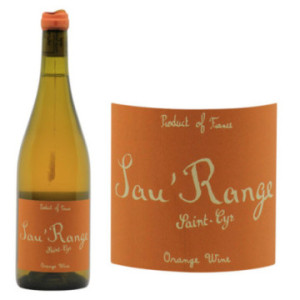
Vin de France Orange "Sau'Range" 2023

Régnié Les Vergers 2020

Brouilly "Zen" 2022

Régnié La Ronze 2020
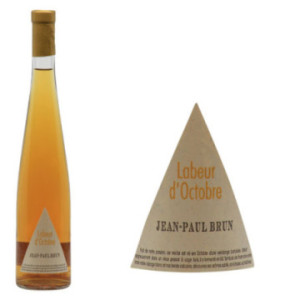
Vin de France Chardonnay "Labeur d'Octobre" 2015
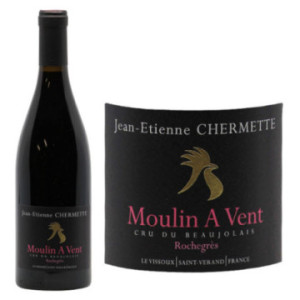
Moulin à Vent "Rochegrés" 2021

Which wines should you buy to age?
A wine for aging has the resources to support its evolution: sufficient acidity, depth of substance, an appropriate tannic structure for reds and, depending on the style, alcohol or sugar. These elements must form a balanced whole. Massive tannins or high concentration do not guarantee longevity if fruit, freshness and precision are lacking.
In Bourgogne, certain Pinot Noir wines from the Côte de Nuits and Côte de Beaune, especially in Premiers Crus and Grands Crus, can evolve for a long time. Village appellations or single-parcel cuvées from demanding producers can also age very well. Among whites, structured Chardonnays from the Côte de Beaune and certain Chablis wines have notable potential, but this varies greatly according to climat, vintage, domaine and storage conditions.
Outside Bourgogne, structured Syrah wines from the northern Rhône Valley, Bordeaux blends, Loire Chenins, certain Cabernet Franc wines, top Jura wines and concentrated Mediterranean cuvées can age beautifully. Vin doux naturels and sweet wines, thanks to their sugar, acidity and sometimes their élevage, are also among the candidates for long keeping.
At a comparable level, favor cuvées from producers who master yields, grape ripeness and élevage. Balanced vintages, with both ripeness and freshness, are often the most reassuring. Finally, it is better to buy several bottles of an age-worthy wine rather than just one: you can then open one at regular intervals to follow its evolution without staking the whole experience on a single date.
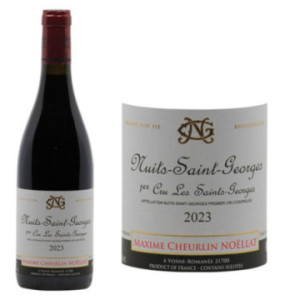
Nuits-Saint-Georges 1er Cru Les Saint-Georges 2023
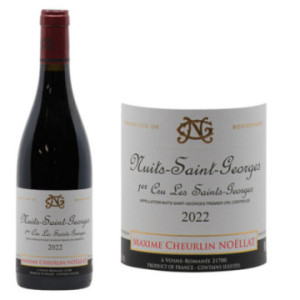
Nuits-Saint-Georges 1er Cru Les Saint-Georges 2022
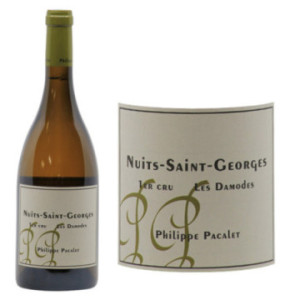
Nuits-Saint-Georges 1er Cru Blanc Les Damodes 2020
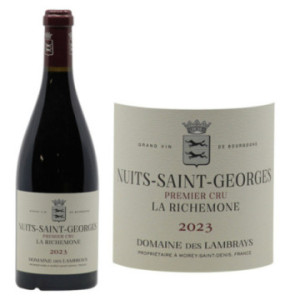
Nuits-Saint-Georges 1er Cru La Richemone 2023
-
97
-

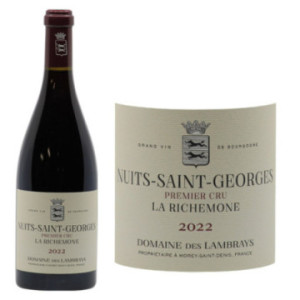
Nuits-Saint-Georges 1er Cru La Richemone 2022
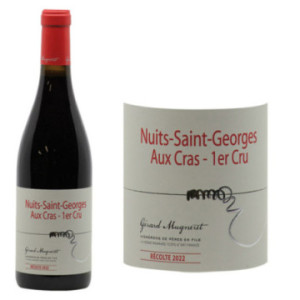
Nuits-Saint-Georges 1er Cru Aux Cras 2022
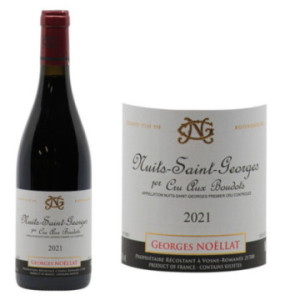
Nuits-Saint-Georges 1er Cru Les Boudots 2021
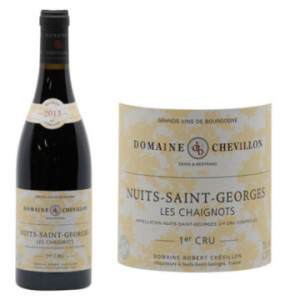
Nuits-Saint-Georges 1er Cru Aux Chaignots 2013
How do you assess a bottle’s aging potential?
Aging potential is assessed first through balance. Acidity brings drive and reduces any sense of heaviness; tannins structure many reds; concentration provides the aromatic substance needed for evolution. None of these criteria should be considered in isolation, however. Sharp acidity without fruit can remain austere, while abundant but dry tannins may never integrate harmoniously.
Grape variety and terroir then provide reference points. Pinot Noir can age thanks to its freshness and the finesse of its phenolic compounds, even when it is not powerfully tannic. Syrah often combines tannins, acidity and substance. Chardonnay from cool terroirs can rely on tension and density. Chenin naturally has high acidity, valuable for preservation. Each grape variety must nevertheless be placed in the context of its origin, yield, ripeness and winemaking method.
The vintage defines the climatic context, but a general score given to a region is not enough. Harvest dates, parcel exposure and the winemaker’s choices can produce very different results within the same year. The producer’s reputation, track record and the drinking windows observed on older cuvées are often more reliable indicators than a basic ranking of vintages.
Finally, prior storage is decisive. A bottle that has been exposed to heat, light or repeated temperature fluctuations can evolve prematurely, even if the wine was originally built to last. For older vintages, check traceability, the fill level in the bottle, the condition of the capsule, the absence of seepage and the guarantees offered by the seller. After purchase, store bottles in the dark, at a stable temperature ideally around 10 to 14°C, without vibration or excessive dryness.
Build a balanced selection between immediate pleasure and aging
To build a coherent cellar, divide bottles by drinking window rather than by appellation alone. A first group will bring together wines to open within the year: lively whites, rosés, sparkling wines and supple reds. A second will gather bottles intended for the next two to five years. The third will be reserved for cuvées that need five years or more before reaching the desired maturity.
A simple allocation can devote 40% of purchases to the under-two-year horizon, 35% to the two-to-five-year horizon and 25% to longer aging. It should be adjusted to your consumption pace and the bottles you already have. If your cellar contains many young great wines, strengthen your ready-to-drink references. If it only contains everyday wines, use the fair to add a few cuvées capable of evolving.
Also diversify colors and uses. Reds are not the only wines that age: certain dry whites, vintage sparkling wines, sweet wines and vins doux can gain complexity. Think about the pairings you actually serve at home, from aperitifs to slow-cooked dishes, rather than a theoretical cellar. A great wine whose style never suits your table remains a poorly directed purchase.
Finally, spread the budget between an accessible base, a mid-range core selection and a few more ambitious bottles. Buy regularly consumed wines by three or six, but limit expensive bets if you do not know the domaine. For each bottle, note the purchase date, price, quantity and estimated drinking window. The wine fair then becomes not a race for discounts, but an opportunity to patiently build a cellar where the present converses with the future.
Questions fréquentes sur les achats à la foire aux vins
What share of your budget should go to wines for aging?
For a cellar that is still being built, allocating around 20 to 40% of the budget to wines for aging is often reasonable. The proportion can increase if you already have enough ready-to-drink bottles and good storage conditions.
Is an expensive wine necessarily a wine for aging?
No. Price may reflect rarity, appellation, the domaine’s reputation or production costs. Aging potential depends above all on the wine’s balance, structure, vintage, producer and storage.
Can you drink a wine immediately if it is described as age-worthy?
Yes, but it may show intense primary fruit, firm tannins or élevage that is still noticeable. Aeration in a decanter can soften it, without reproducing the complex transformations achieved after several years in bottle.
How can you tell whether an old vintage sold at a wine fair is a good deal?
Examine its provenance, storage conditions, fill level in the bottle, capsule condition and any signs of seepage. Also compare the price with the wine’s stage of evolution: an older bottle is only interesting if it is still within a favorable drinking window.
Do you need an underground cellar to store wine?
No. A wine aging cabinet can be suitable if it maintains a stable temperature, protects from light and limits vibrations. A cupboard exposed to summer heat or major temperature fluctuations is not suitable for prolonged aging.