



Corsican wines: appellations, grape varieties and pairings
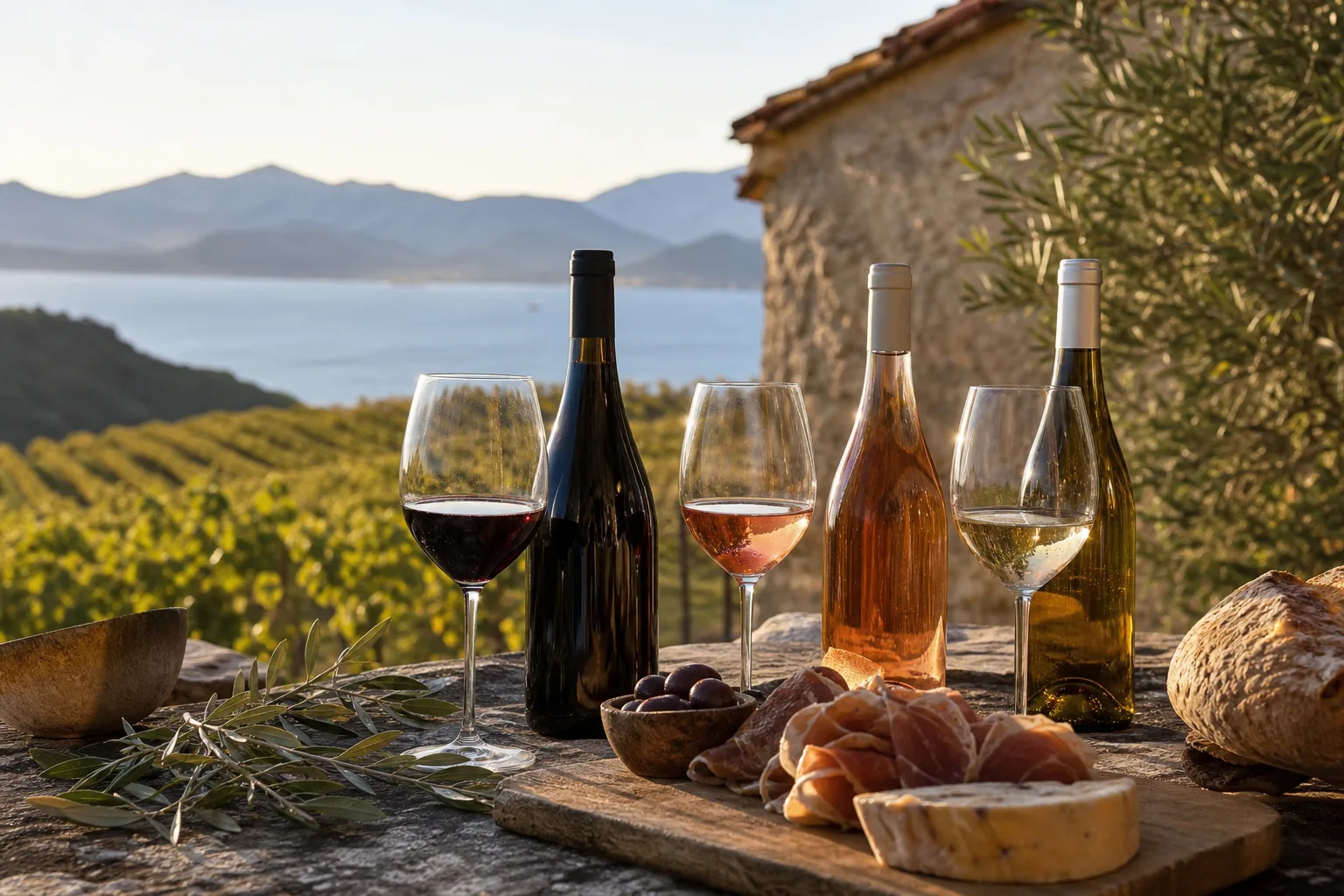
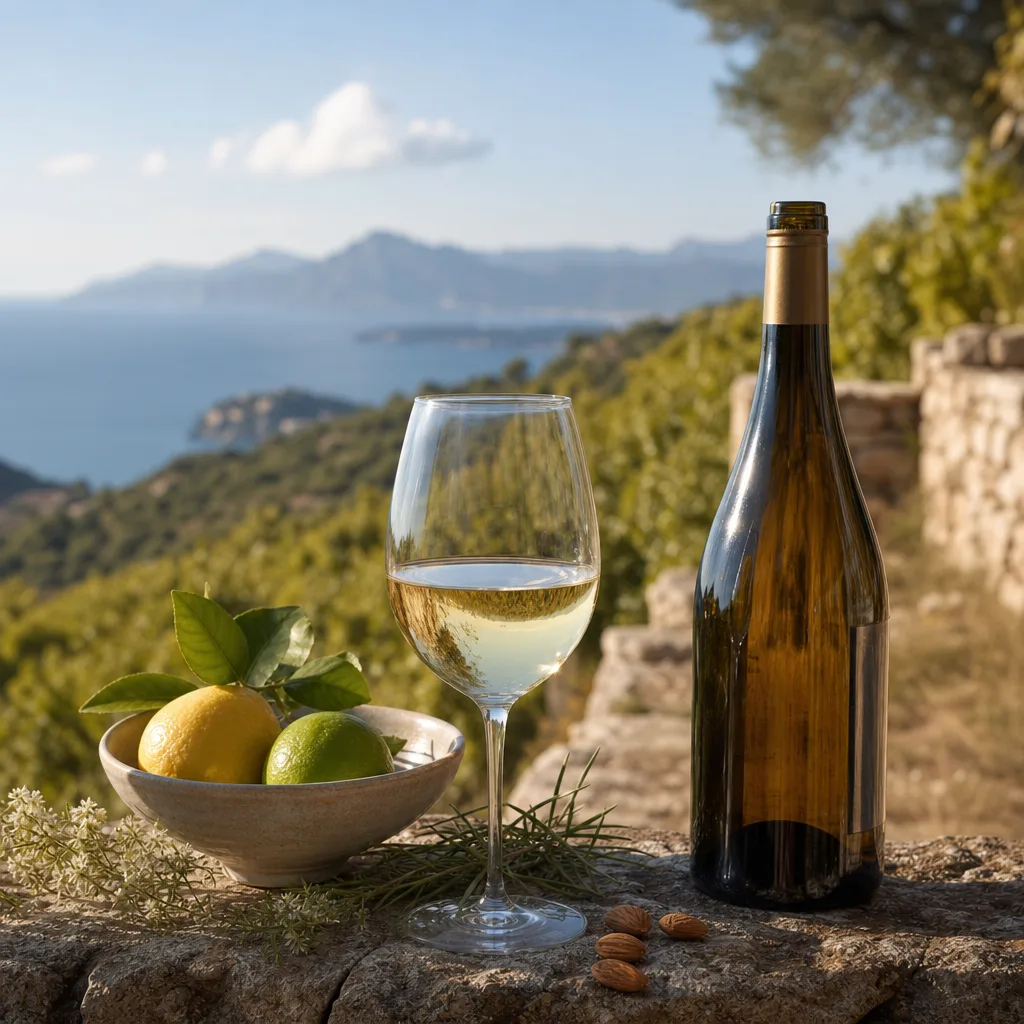
Corsican wines are distinctive Mediterranean wines, born on an island where the vine looks out to sea while never forgetting the mountains. Their identity is rooted in local grape varieties, highly varied soils — schist, granite, limestone, sandy decomposed rock — and a sunny climate tempered by winds. You will find luminous whites, spicy reds, gastronomic rosés and naturally sweet muscats, with a personality often fresher and more saline than one might expect from a southern vineyard.
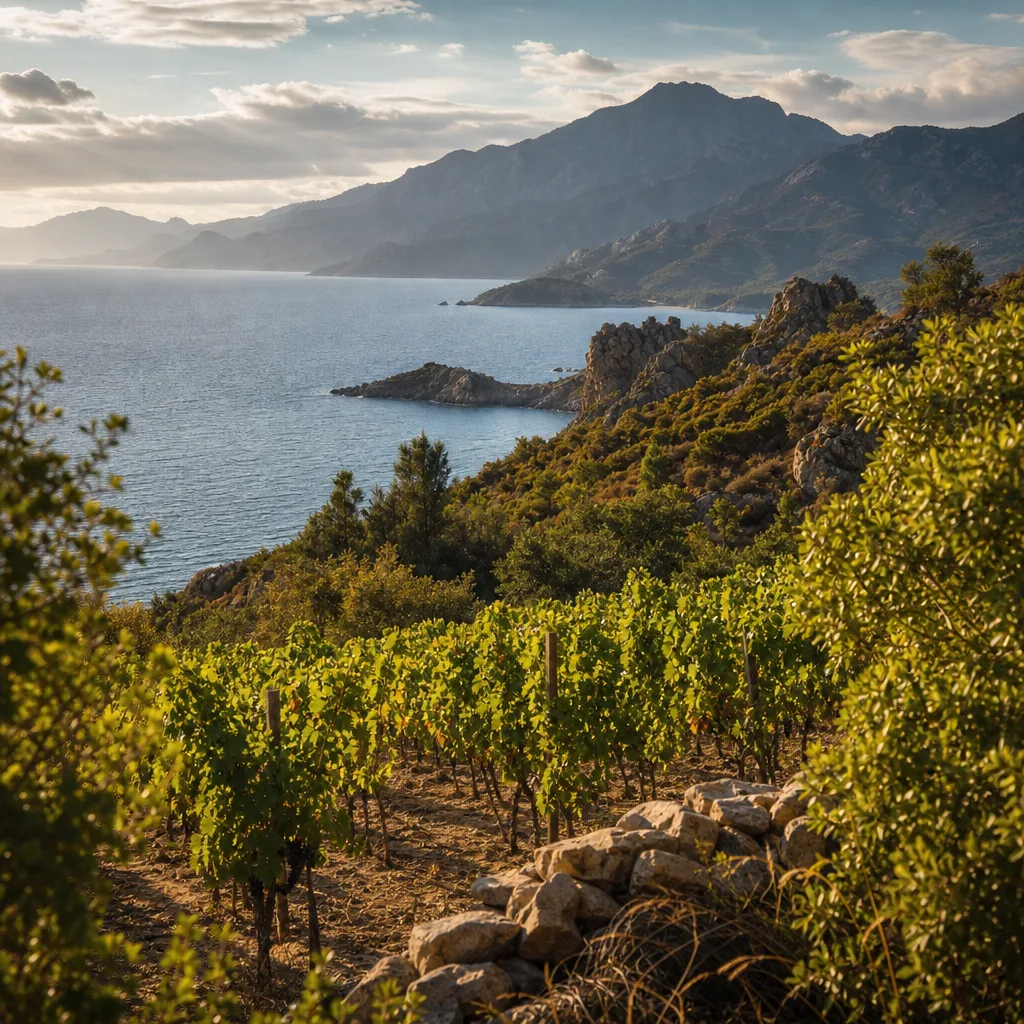
Understanding Corsican wines: an identity shaped by sea, mountains and maquis
To speak of Corsican wines is to enter a geography unlike any other. The island is bathed in light, but rarely overwhelmed by it: winds, cooler nights at altitude and maritime influence preserve the balance of the grapes. This tension between sun-ripened maturity and freshness explains the precision of many Corsican wines, often aromatic without heaviness.
The Corsican wine landscape is fragmented, sometimes steep, always expressive. In the north, Cap Corse and Patrimonio combine maritime influences with distinctive soils, especially limestone in Patrimonio. To the west, around Ajaccio, granites suit Sciaccarellu admirably. Farther south, Figari, Sartène and Porto-Vecchio produce wines that are often sun-filled and spicy, yet capable of impressive poise when crafted with precision.
A good Corsican wine is not merely Mediterranean: it carries salt, warm stone, dried herbs and evening freshness with it.
Grands Bourgognes
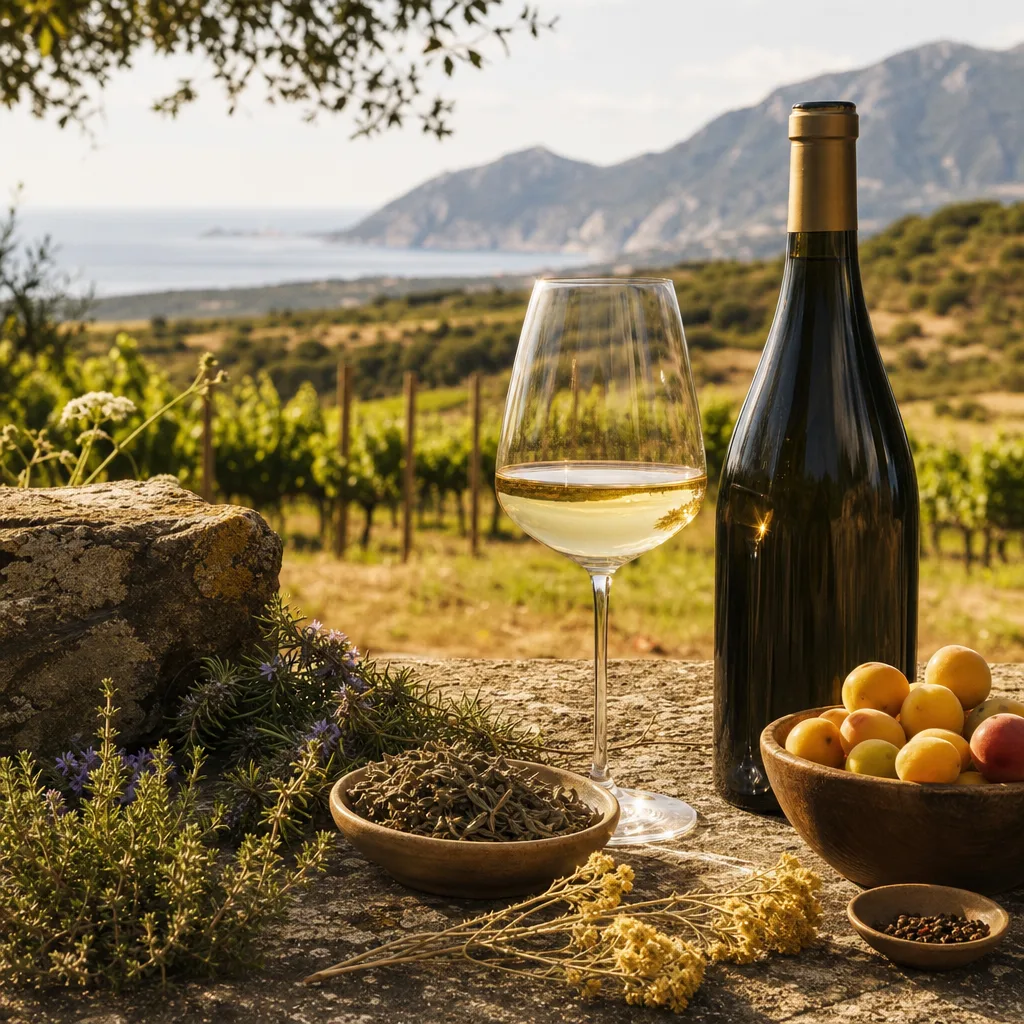
The main appellations of Corsican wines
Corsica has a hierarchy of appellations that makes labels easier to understand. There is the regional AOP Vin de Corse, several associated geographical denominations, two especially well-known communal or historic appellations — Patrimonio and Ajaccio — as well as the Muscat du Cap Corse appellation, dedicated to naturally sweet wines.
AOP Patrimonio
Located in the north of the island, near Saint-Florent, Patrimonio is one of Corsica’s most renowned appellations. Its reds are often dominated by Niellucciu, a grape variety related to Sangiovese, which produces full-bodied, spicy wines with notes of black fruit, fine leather, dried herbs and sometimes liquorice. The whites, made from Vermentinu, can reach great intensity: citrus, white flowers, almond and a saline sensation.
AOP Ajaccio
AOP Ajaccio is the kingdom of Sciaccarellu. This emblematic red grape variety produces wines that are often more airy than massive, with aromas of red fruit, pepper, sweet spices and dried flowers. The finest Ajaccio reds combine tannic finesse, freshness and southern character.
AOP Vin de Corse and geographical denominations
The Vin de Corse appellation covers a large part of the island’s vineyards. It may be supplemented by geographical denominations such as Calvi, Sartène, Figari, Porto-Vecchio or Coteaux du Cap Corse. These mentions provide valuable clues about style: Calvi can express beautiful maritime freshness, Figari and Sartène more southern, structured and spicy profiles, while Cap Corse carries a highly mineral, windswept identity.
AOP Muscat du Cap Corse
Muscat du Cap Corse is a naturally sweet wine produced from Muscat à petits grains. It offers aromas of fresh grape, orange peel, flowers, light honey and sometimes aromatic herbs. Served chilled, it pairs just as well with a citrus dessert as with blue-veined cheese or an almond pastry.
IGP Île de Beauté
IGP Île de Beauté offers greater freedom in blending and style. You will find simple, fruity wines, but also ambitious cuvées, sometimes made from Corsican grapes combined with more international or Mediterranean varieties. When buying online, IGP can be an excellent gateway, provided you look at the estate, the grape varieties and the winemaking philosophy.
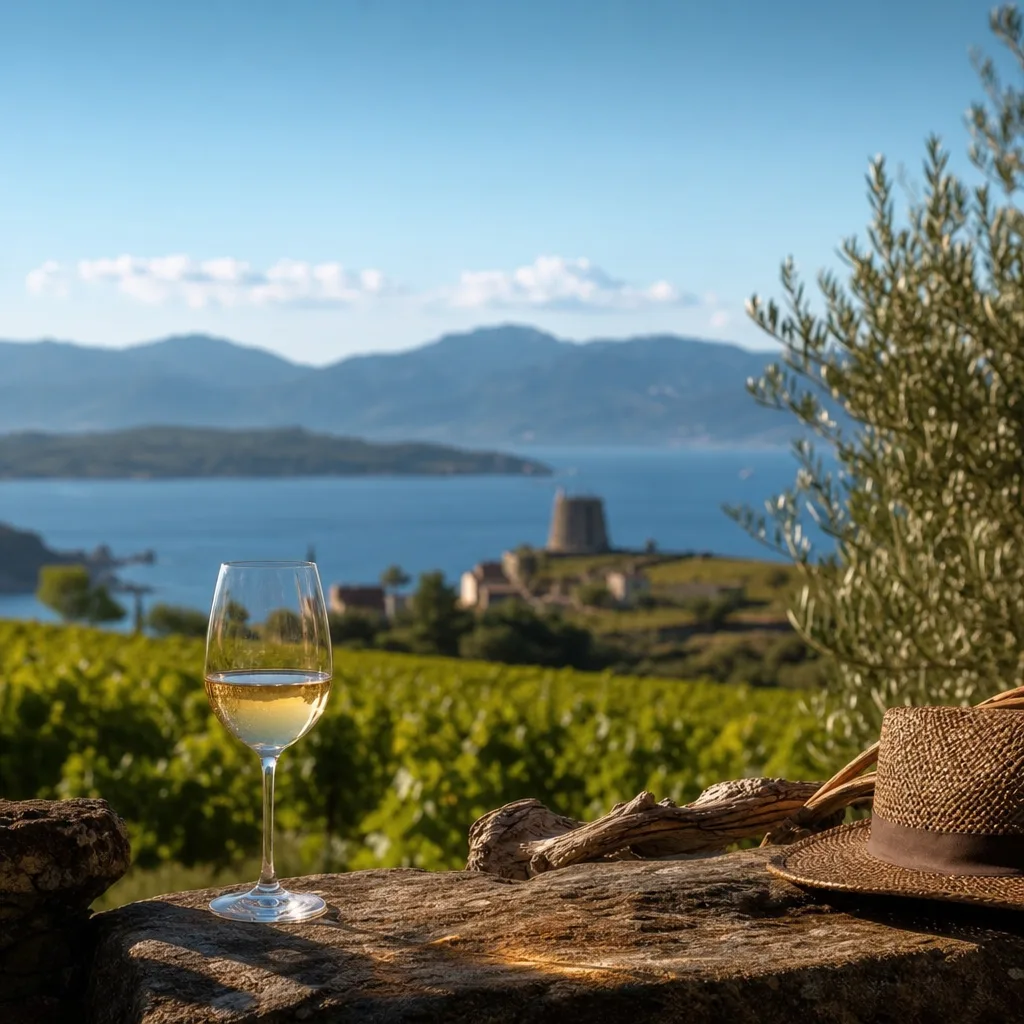
Corsican grape varieties to know
Corsican wines draw much of their personality from grape varieties closely tied to the island’s winegrowing history. Some have Italian or Mediterranean affinities, but their Corsican expression is quite specific, shaped by soils, winds, altitude and the practices of the winegrowers.
Niellucciu: structure, spice and depth
Niellucciu is one of Corsica’s great red grape varieties, especially associated with Patrimonio. It produces deeply coloured, tannic wines, often marked by black cherry, plum, spices, violet, maquis and, with age, a slight smoky or animal note. When well vinified, it can deliver fine age-worthy wines.
Sciaccarellu: finesse, pepper and red fruit
Sciaccarellu, widely planted around Ajaccio, is prized for its elegance. Its name evokes the crunch of the grape; in the glass, it gives fragrant reds, sometimes pale in colour, but never ordinary: strawberry, raspberry, pepper, flowers and dried herbs. It is also important in some gastronomic Corsican rosés.
Vermentinu: Corsica’s great white grape
Vermentinu, known elsewhere as Vermentino or Rolle, is Corsica’s emblematic white grape variety. It produces dry, expressive wines with notes of citrus, pear, white flowers, fresh almond and sometimes iodine. The finest Corsican Vermentinu wines are not merely aromatic: they have texture, a saline vibration and a finely bitter finish that make them highly gastronomic.
Other grape varieties: Biancu Gentile, Grenache, Cinsault, Syrah
Corsica also cultivates Biancu Gentile, an old white grape variety that has returned to favour, often floral, generous and delicate. Grenache, Cinsault and Syrah — the latter historically associated with the Rhône Valley — are also found and may be used in certain blends depending on the specifications or in IGP cuvées. For many Corsican estates, the challenge is to preserve the island identity without forgoing relevant blending balance.
Styles of Corsican wines: reds, whites, rosés and muscats
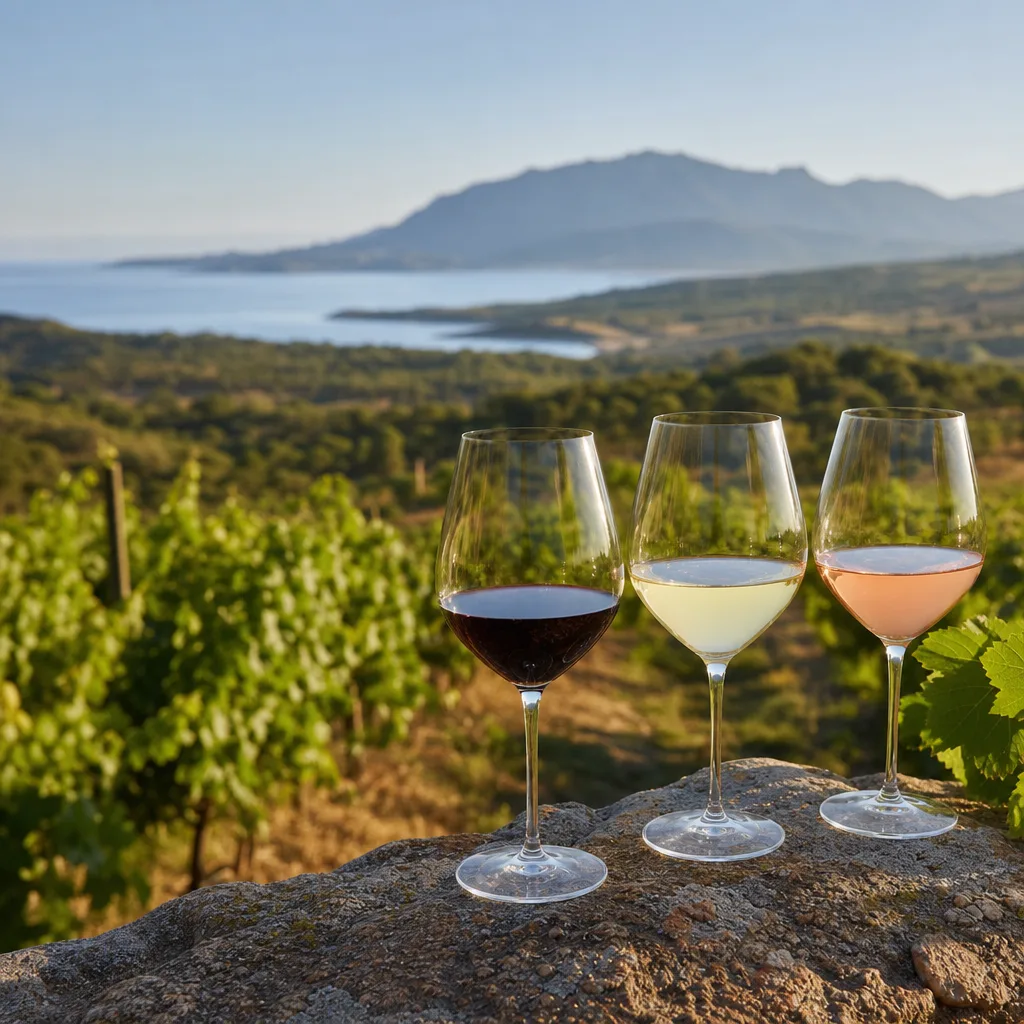
Corsican wines cannot be reduced to one colour or one style. The island produces easy-drinking wines, gastronomic cuvées and bottles for cellaring. The common thread among the best wines is often their ability to bring together sun and freshness, ripe fruit and a sense of place.
Corsican reds
Corsican reds can be supple, juicy and spicy when intended for youthful drinking. More ambitious cuvées, especially those based on Niellucciu or Sciaccarellu, gain depth with a few years: the tannins soften, and notes of maquis, fine leather, candied fruit and spices become integrated.
Corsican whites
Corsican whites, mostly made from Vermentinu, are among the island’s most appealing signatures. They can be lively and thirst-quenching, or broader, worked on lees, sometimes aged in neutral vessels or judiciously in oak. Their saline finish makes them particularly suited to fish, shellfish and fresh cheeses.
Corsican rosés
Corsican rosés are not just terrace wines. Depending on the grape varieties and winemaking method, they can offer red fruit, citrus, fine spices and genuine structure. These are meal-friendly rosés, capable of accompanying fragrant Mediterranean cuisine.
Muscats and sweet wines
Muscat du Cap Corse completes the palette with a sweet, aromatic and luminous register. It should be served chilled, but not too cold, to preserve its bouquet of grape, citrus and flowers. It is an ideal wine for the aperitif, lightly sweet desserts or certain bold savoury pairings.
Corsican food and wine pairings
Corsican wines naturally belong at the table. Their aromatic register — dried herbs, ripe fruit, spices, citrus, iodine notes — responds beautifully to Mediterranean cuisine, but also to more continental dishes when they have depth and substance.
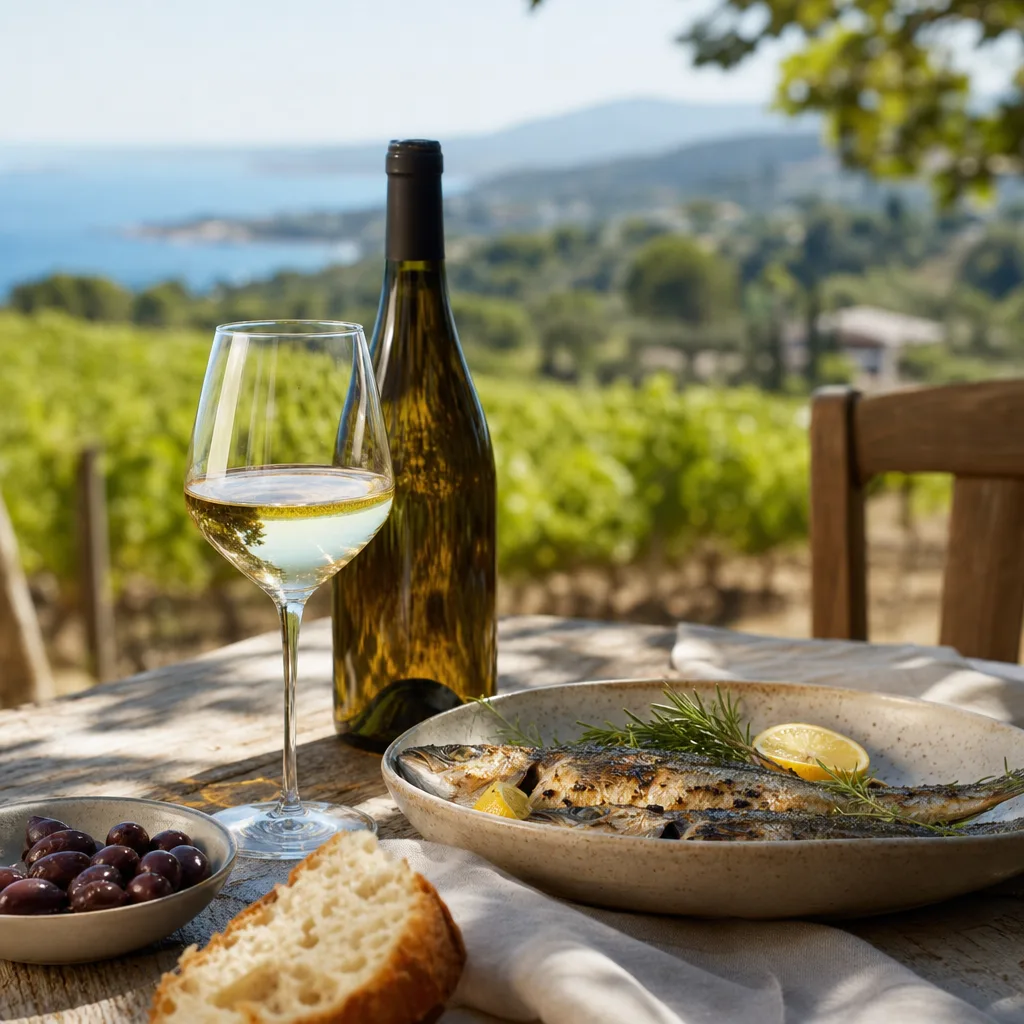
Vermentinu and grilled fish: sea bream, sea bass, red mullet, octopus, squid or prawns, with olive oil, lemon and fresh herbs.
Sciaccarellu red and charcuterie: coppa, lonzu, prisuttu, but also terrines, cured ham and grilled white meats.
Niellucciu and lamb: roast lamb, rosemary chops, veal with olives, slow-cooked dishes with maquis herbs.
Corsican rosé and summer cuisine: grilled vegetables, ratatouille, stuffed tomatoes, pasta salads, dishes with herbs and anchovies.
Muscat du Cap Corse: canistrelli, citrus dessert, apricot tart, blue-veined cheese or lightly sweetened brocciu.
With Corsican cheeses, especially sheep’s or goat’s milk cheeses, the choice depends on maturity. A fresh cheese calls for a Vermentinu white; a stronger cheese may prefer a red with softened tannins, or a Muscat du Cap Corse if you are looking for a sweet-savoury contrast.
Vintages and cellaring: when should you drink a Corsican wine?
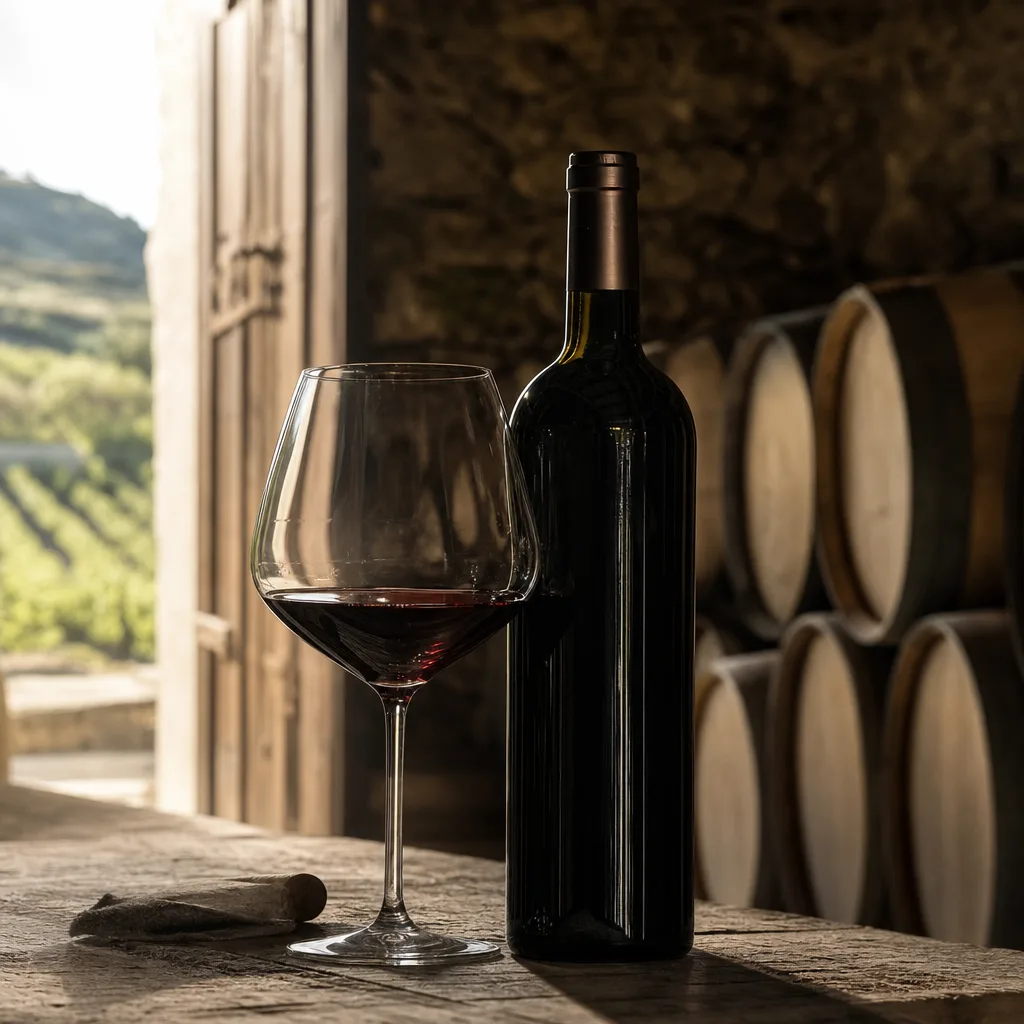
Most Corsican wines are enjoyed in their youth, especially lively whites, rosés and fruit-driven reds. But it would be simplistic to think the island produces only wines for immediate drinking. Structured reds from Patrimonio, Ajaccio or certain cuvées from Figari, Sartène and Porto-Vecchio can gain complexity over several years.
As a general rule, a dry Corsican white is best drunk within 2 to 4 years to enjoy its aromatic brilliance, even if some carefully aged cuvées can evolve for longer. A supple red is best enjoyed between 2 and 5 years; a more ambitious red can wait 5 to 10 years depending on the estate, the vintage and storage conditions.
As in all Mediterranean regions, the vintage influences balance. Very hot years produce riper, more sun-filled wines; more temperate vintages often favour tension, drinkability and fine balance. When buying online, it is useful to match the wine’s age with its style: fresh white, age-worthy red, gastronomic rosé or naturally sweet muscat.
How to choose a Corsican wine online
To choose the right Corsican wine from an online shop, start by identifying the occasion: aperitif, fish-based meal, grilled meats, Mediterranean cuisine, gift or cellaring. The appellation and grape variety then provide clear guidance, but the estate’s style remains decisive.
For a fresh, saline white: choose a Vermentinu, in AOP Vin de Corse, Patrimonio, Calvi or another island denomination.
For a fine, spicy red: look for cuvées dominated by Sciaccarellu, especially around Ajaccio.
For a more structured red: turn to Niellucciu, particularly in Patrimonio or in ambitious blends.
For a meal-friendly rosé: choose a Corsican rosé made from local grape varieties, with a description indicating body and freshness.
For an aperitif or dessert: consider Muscat du Cap Corse, served chilled.
At Grands Bourgognes, Burgundy remains our historic speciality, but our curiosity as wine merchants extends to France’s great regions. Corsican wines deserve this attention: they offer an original alternative for lovers of Mediterranean wines, with a strong identity and a genuine gastronomic dimension.
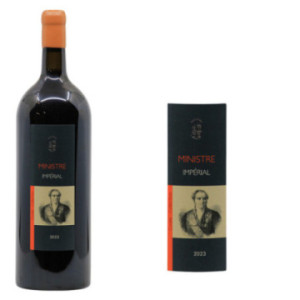

Vin de France Rouge "Ministre Impérial" 2023
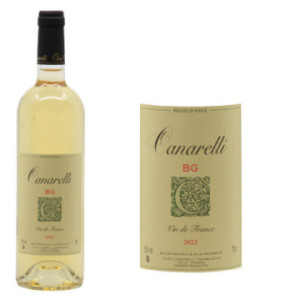
Vin de France Blanc "Bianco Gentile" 2022
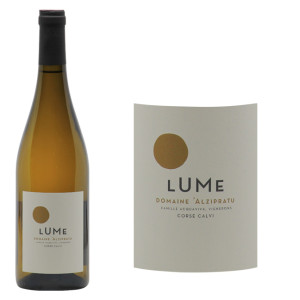
Vin de Corse Calvi Blanc "Lume" 2023
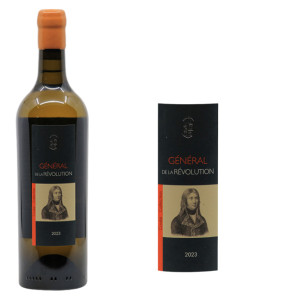
Vin de France Blanc "Général de la... 2023
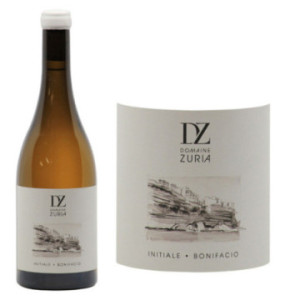
IGP Ile de Beauté Blanc "DZ Initiale" 2023
Corsican wines compared with other French regions
Corsican wines occupy a distinctive place in the French landscape. They share with Provence a culture of rosé and a Mediterranean climate, with the southern Rhône an affinity for spicy, sun-filled reds, and with certain Italian regions a historical proximity of grape varieties. Yet their signature remains insular: more saline, more marked by the maquis, often fresher than their latitude would suggest.
For a Burgundy enthusiast, the discovery can be fascinating: not because the wines are similar, but because Corsica, like Burgundy, reminds us that place matters. Nuances of soil, exposure, wind and grape variety shape very different expressions from one area to another.
FAQ sur les vins de Corse
What are the main grape varieties in Corsican wines?
The main Corsican grape varieties are Niellucciu and Sciaccarellu for reds and rosés, and Vermentinu for whites. You will also find Biancu Gentile, Grenache, Cinsault, Syrah and Muscat à petits grains for Muscat du Cap Corse.
What is the best-known Corsican wine?
Patrimonio is among the best-known Corsican appellations, especially for its Niellucciu-based reds and Vermentinu whites. Ajaccio, Vin de Corse, denominations such as Figari or Calvi, and Muscat du Cap Corse are also important benchmarks.
Are Corsican wines mainly red, white or rosé?
Corsica produces all three colours seriously. The reds are often spicy and fragrant, the dry whites stand out for their saline freshness, and the rosés can be true meal wines. Muscat du Cap Corse completes the range with a naturally sweet style.
What should you drink with a Corsican white wine?
A Vermentinu-based Corsican white pairs very well with grilled fish, shellfish, octopus, squid, Mediterranean salads, fresh sheep’s or goat’s milk cheeses and dishes featuring citrus or herbs.
Can a Corsican red wine age?
Yes, some Corsican red cuvées can age, especially when made from Niellucciu or Sciaccarellu with good structure. The most ambitious reds can be kept for several years, sometimes up to 10 years depending on the estate, vintage and cellar.
What serving temperature for Corsican wines?
Serve Corsican whites at around 9 to 11 °C, rosés at around 10 to 12 °C, supple reds at around 14 to 15 °C and more structured reds at around 16 to 17 °C. Muscat du Cap Corse is enjoyed chilled, generally around 8 to 10 °C.